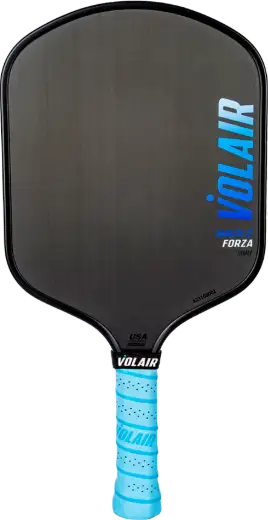
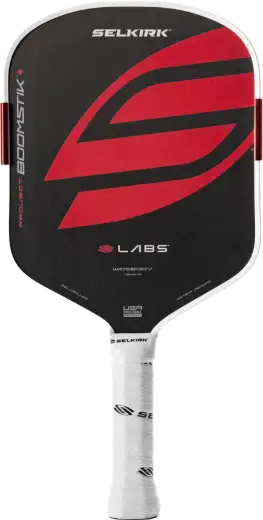
Selkirk Boomstik Widebody
Widebody · 16mm
- A84Power
- S91Pop
- B76Spin
- S98Sweet spot
- B70Control
$333plus a $40 gift card with code INF-STSPICKLEBALL
Get it at SelkirkThe elongated hits harder, the widebody forgives more, and the hybrid sits in between. Ten models I've tested come as both an elongated and a widebody, and the elongated had more power in eight of them, typically by 7.5 points of power. The widebody had the bigger sweet spot and more control in all 10, typically by 28 points of sweet spot and 29 of control.
You've probably heard that elongated paddles bring power and widebodies bring forgiveness. My numbers show how much of each, because I run every paddle through the same tests, and 16 models I've tested come in more than one shape. When the brand, the model and the thickness stay the same and only the shape changes, that's as close as you can get to seeing what the shape alone does.

By Steven Shipler · Published I earn a commission when you buy through my links or codes. It never changes a rank. How I test
One line in all three shapes
Each paddle at its real size
Every paddle splits the same space. The rules cap a paddle at 17 inches long and 24 inches in length plus width, and brands use almost every bit of it, since nearly all the paddles I've tested come within 0.2 inch of 24 inches. Shape is how a brand splits those 24 inches, so a longer face has to be a narrower one.
| Measure | Widebody | Hybrid | Elongated |
|---|---|---|---|
| Typical size | 16 x 8 in | 16.25 x 7.75 in | 16.5 x 7.5 in |
| Length range | 15.7 to 16 in | 16.1 to 16.4 in | 16.4 to 16.6 in |
| Width range | 7.85 to 8.2 in | 7.35 to 7.8 in | 7.35 to 7.6 in |
A widebody gives you the widest face and the least reach. An elongated paddle is the longest and narrowest: the most reach, the smallest sweet spot, and a sweet spot that sits higher up the face. A hybrid is in between.
Hybrid is a label, not a size. Nine hybrids I've tested are 7.5 inches wide or narrower, which is the same width as a typical elongated paddle. The Gearbox GX2 Integra XL measures 16.38 x 7.38 inches and the Vulcan Dark Matter 16.35 x 7.35 inches, so check the width, not the name.
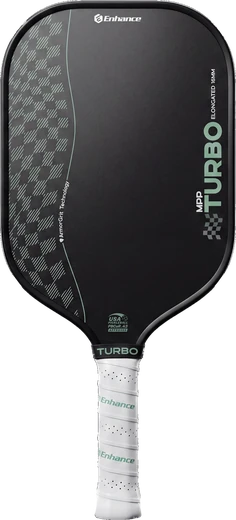
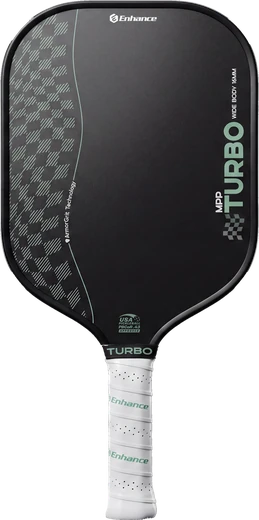
To see what the shape alone changes, I lined up every model I've tested that comes as both an elongated and a widebody from the same brand at the same thickness. Ten models I've tested come in both: Enhance's DUO, EPP Turbo, MPP Turbo and MPP Turbo ArmorGrit, Selkirk's Boomstik, OMNI and SLK Dauntless, the Friday Aura Pro, the RPM Q2 and the Volair SHIFT. Here's what moved when only the shape did.
| What I compared | Typical change on the elongated | Pairs that went that way |
|---|---|---|
| Length | 0.5 in longer | All 10 |
| Width | 0.5 in narrower | All 10 |
| Handle | 0.2 in longer | 8 of 10 (2 the same) |
| Weight | No change | Same listed weight range in 5 of 10 |
| Balance point | 0.5 cm closer to the tip | All 10 |
| Swing weight | 7.8 heavier | All 10 |
| Twist weight | 0.65 lower | All 10 |
| Power | 7.5 more | 8 of 10 (2 even) |
| Pop | 7.5 less | 9 of 10 (1 more) |
| Spin | 5 RPM less | 6 of 10 (3 more, 1 even) |
| Sweet spot | 28 smaller | All 10 |
| Control | 29 less | All 10 |
Sweet spot and control go to the widebody every time. In all 10 models the widebody had the bigger sweet spot and more control, and its sweet spot was never less than 20 points bigger. The reason is twist weight, which is how well a paddle resists turning in your hand when you hit off center. A wider face carries more of its weight out at the sides, and the widebody's twist weight was higher in all 10.
Power goes to the elongated. The elongated had more power in eight of the 10 models, typically by 7.5 points of power, and it never hit softer. The other two, the EPP Turbo and the SLK Dauntless, scored the same in both shapes. The elongated weighs about the same as the widebody version, but it carries that weight farther from your hand. Its balance point sits closer to the tip in all 10, and its swing weight is higher in all 10, typically by 7.8. On a full swing, a longer paddle with its weight farther out puts more pace on the ball.
The price of that power is hand speed. Swing weight is how heavy a paddle feels when you swing it, and the widebody swung lighter in all 10, which makes it the quicker paddle in a hands battle at the kitchen.
Pop goes to the widebody too. The widebody had more pop in nine of the 10 models, typically by 7.5 points of pop, and the Selkirk Boomstik is the only one where the elongated version has more.
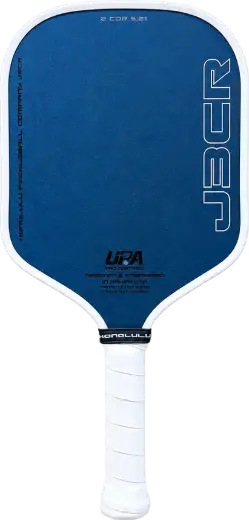
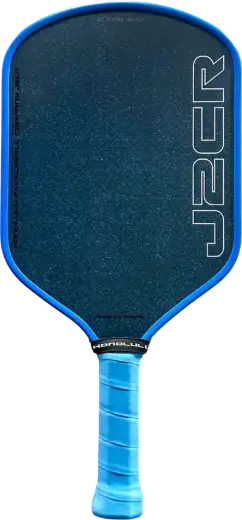
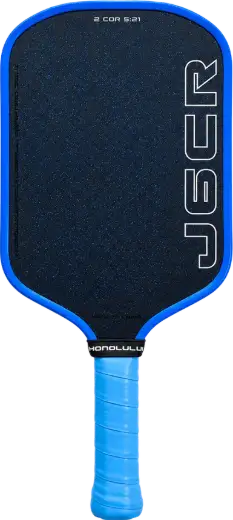
Spin doesn't change. The two versions were within 50 RPM of each other in nine of the 10 models, and the typical gap was 15 RPM either way. Across the paddles I've tested, spin runs from 2,059 to 2,467 RPM, yet the typical widebody, hybrid and elongated you can buy today sit within 5 RPM of each other. That's because the face sets spin, not the shape. The clearest proof is Honolulu's Crystal Blue paddles, which come in all three shapes and are the three highest-spin paddles I've tested: the J2CR Long Handle Crystal Blue (2,467 RPM), the J3CR Crystal Blue (2,436 RPM) and the J6CR Crystal Blue (2,424 RPM).
The elongated usually gets the longer handle. It had the longer handle in eight of the 10 models, and the other two were the same. Across everything I've tested, 28 elongated paddles have a handle of 5.75 inches or more, against only 11 hybrids and seven widebodies. That matters if you hit a two-handed backhand.
| Line | Power | Pop | Sweet spot | Control | Swing weight |
|---|---|---|---|---|---|
| Selkirk Boomstik | 84 / 97 | 91 / 99 | 98 / 74 | 70 / 56 | 110.2 / 117.0 |
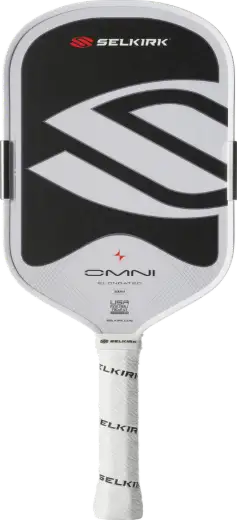
| Selkirk OMNI | 73 / 79 | 80 / 79 | 89 / 69 | 76 / 68 | 113.4 / 119.5 |
| Selkirk SLK Dauntless | 50 / 50 | 70 / 58 | 89 / 68 | 89 / 73 | 110.7 / 116.5 |
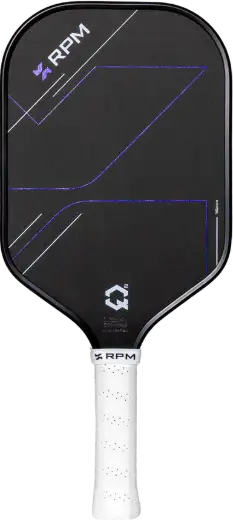
| RPM Q2 16mm | 90 / 98 | 98 / 89 | 81 / 38 | 64 / 20 | 107.5 / 113.4 |
| Friday Aura Pro | 90 / 95 | 89 / 82 | 84 / 45 | 56 / 18 | 103.8 / 114.5 |
| Enhance MPP Turbo | 80 / 91 | 85 / 82 | 92 / 60 | 76 / 45 | 106.9 / 115.2 |
| Enhance MPP Turbo ArmorGrit | 83 / 90 | 90 / 82 | 93 / 66 | 74 / 53 | 105.6 / 112.8 |
| Enhance EPP Turbo | 91 / 91 | 90 / 86 | 88 / 59 | 70 / 32 | 107.0 / 118.1 |
| Enhance DUO | 74 / 84 | 88 / 79 | 89 / 64 | 72 / 45 | 109.0 / 118.2 |
| Volair SHIFT 14mm | 38 / 72 | 80 / 70 | 83 / 38 | 79 / 30 | 103.4 / 117.8 |
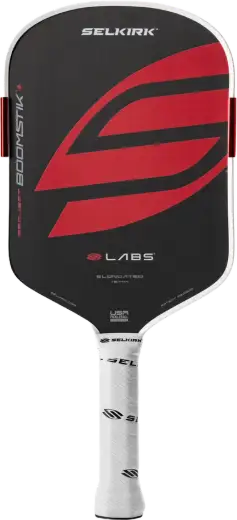
In eight of the 10, the elongated has more power, by 5 points or more in all eight, and in the other two the power is the same. In all 10, the widebody has the bigger sweet spot, more control and the lighter swing. The Selkirk Boomstik Elongated is the rare one that wins pop too, with pop 99 out of 100 against 91 for the Boomstik Widebody. Compare the two Boomstiks side by side.
Six models I've tested come in all three shapes, and two lines show the whole trade in one place. Enhance's EPP Turbo costs the same in every shape. Honolulu sells its Crystal Blue paddles in all three shapes too, with a different name for each, and gives you a 6-inch handle on all three (the J2CR in its Long Handle version), so the handle stays the same and only the head changes.
| Measure | Widebody | Hybrid | Elongated |
|---|---|---|---|
| Size | 16 x 8 in | 16.25 x 7.75 in | 16.5 x 7.5 in |
| Handle | 5.3 in | 5.9 in | 5.7 in |
| Swing weight | 107.0 | 108.1 | 118.1 |
| Twist weight | 7.12 | 6.46 | 6.38 |
| Power | 91 | 91 | 91 |
| Pop | 90 | 89 | 86 |
| Spin | 2,284 RPM | 2,269 RPM | 2,277 RPM |
| Sweet spot | 88 | 71 | 59 |
| Control | 70 | 57 | 32 |
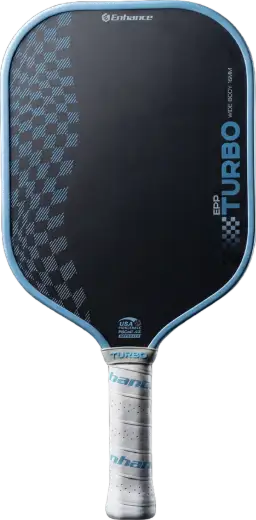
Power doesn't move at all here, at 91 out of 100 in every shape. The shape moves the sweet spot from 88 down to 59, control from 70 down to 32, and swing weight from 107.0 up to 118.1. Same power, so the shape only decides how forgiving the paddle is.
| Measure | J3CR Crystal Blue (widebody) | J2CR Long Handle Crystal Blue (hybrid) | J6CR Crystal Blue (elongated) |
|---|---|---|---|
| Size | 16 x 8 in | 16.2 x 7.8 in | 16.48 x 7.52 in |
| Swing weight | 108.1 | 108.9 | 111.27 |
| Twist weight | 6.73 | 6.32 | 6.07 |
| Power | 81 | 86 | 87 |
| Pop | 86 | 90 | 85 |
| Spin | 2,436 RPM | 2,467 RPM | 2,424 RPM |
| Sweet spot | 86 | 82 | 72 |
| Control | 76 | 73 | 69 |
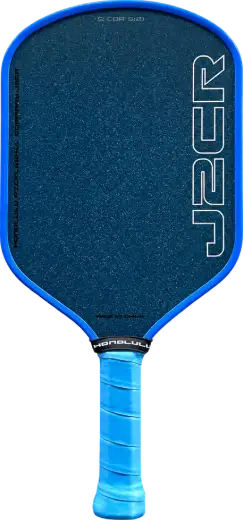
The Crystal Blue paddles follow the same pattern at a smaller size. The J6CR Crystal Blue hits a little harder than the J3CR Crystal Blue (power 87 against 81), and the J3CR's sweet spot is clearly bigger (86 against 72). All three are on my lists. The J6CR Crystal Blue tops my elongated list, the J2CR Long Handle Crystal Blue is third on my hybrid list, and the J3CR Crystal Blue is third on my widebody list. Compare all three.
It does. Against the same model in the other two shapes, the typical hybrid lands between them on everything that moves.
| What I compared | Hybrid vs elongated (12 models) | Hybrid vs widebody (6 models) |
|---|---|---|
| Sweet spot | 14 bigger, in all 12 | 16 smaller, in all 6 |
| Control | 22 more, in all 12 | 10.5 less, in 5 |
| Power | 5.5 less, in 10 (2 even) | 1.5 more, in 5 (1 even) |
| Swing weight | 5.4 lighter, in all 12 | 4.2 heavier, in all 6 |
| Twist weight | 0.3 higher, in 10 | 0.6 lower, in all 6 |
| Pop | 3 more, in 8 (1 even) | 6 less, in all 6 |
| Spin | About the same | About the same |
Twelve models I've tested come as both an elongated and a hybrid. In 10 of them the elongated hit harder, it never hit softer, and in all 12 it gave up sweet spot and control. So against the elongated, the hybrid typically gives up 5.5 points of power and gets back 14 points of sweet spot and 22 of control. If you want some reach without the elongated's narrow face, that's a good trade.
Shape tilts a paddle, but the build sets its level. The typical elongated you can buy today scores 80 out of 100 for power and the typical hybrid scores 76.5, so they're about the same. And the paddle with the most power of any I've tested is a hybrid, the Pickleball Apes Zen S+, which scored 100 for power. A hot hybrid can outhit a mild elongated.
The models above isolate the shape. These are the typical numbers, the middle of each group, for every paddle you can buy today, so they show shape and build together. This is the market you're shopping.
| Measure | Widebody | Hybrid | Elongated |
|---|---|---|---|
| Size | 16 x 8 in | 16.25 x 7.75 in | 16.5 x 7.5 in |
| Handle | 5.5 in | 5.5 in | 5.52 in |
| Swing weight | 108.8 | 111.9 | 117.6 |
| Twist weight | 6.92 | 6.57 | 6.21 |
| Power | 64.5 | 76.5 | 80 |
| Pop | 78.5 | 74 | 74 |
| Spin | 2,272.5 RPM | 2,272 RPM | 2,277 RPM |
| Sweet spot | 83 | 71.5 | 52 |
| Control | 76 | 71 | 45 |
The groups overlap, but not evenly. Thirteen widebodies I've tested hit at least as hard as a typical elongated (power 80 or more), and the hardest hitting widebody you can buy is the Enhance EPP Turbo Widebody, at 91 out of 100. Not one elongated paddle I've tested reaches the sweet spot of a typical widebody (83), and the closest is the Selkirk Boomstik Elongated at a sweet spot of 74. Only two elongated paddles I've tested reach a typical widebody's control (76), and the one you can still buy is the Honolulu J6FC+ at control 78.
Twist weight splits the same way. The typical paddle you can buy today has a twist weight of 6.47, and about four in five elongated paddles I've tested sit below that, while only nine widebodies I've tested do.
Most pros play elongated or hybrid paddles. They want the reach and the extra pace on drives, and they hit the center of the face far more often than most rec players, so the smaller sweet spot costs them less. Widebodies are the least common shape at the top level, though a few top players use one.
Copy their game, not their shape. The sweet spot gap between the widebody and elongated versions of the same model is typically 28 points, and you pay it on every ball you catch off center.
Pick the trade you want. My own lists end up sorting by shape, since eight of my 10 beginner picks are widebodies, six of my 10 intermediate picks are hybrids, and eight of my 10 advanced picks are elongated.
Already happy with your shape? Stay in it when you change paddles, and compare paddles within that shape. If you love the elongated's reach but your off-center balls fly, a few grams of lead tape on the sides raises twist weight, at the cost of some swing weight.
Widebody · 16mm
$333plus a $40 gift card with code INF-STSPICKLEBALL
Get it at SelkirkWidebody · 16mm
$199.99list price $209.99with code STSPICKLEBALL
Widebody · 16mm
$175.50list price $195with code STS10
Widebody · 16mm
$99.99list price $119.99with code STSPICKLEBALL
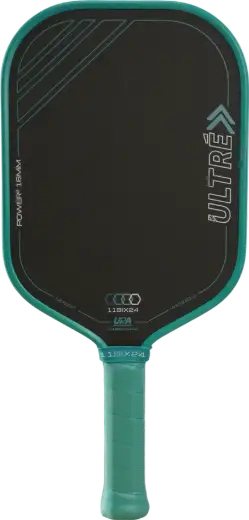
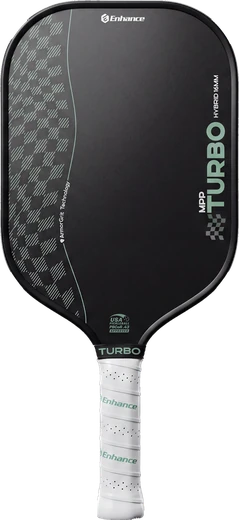
The top three on my widebody list, plus the Enhance EPP Turbo Widebody, one of the two budget picks on that list.
Hybrid · 16mm
$175.50list price $195with code STS10
Hybrid · 16mm
$199.99list price $209.99with code STSPICKLEBALL
Hybrid · 16mm
$175.50list price $195with code STS10
Hybrid · 16mm
$99.99list price $119.99with code STSPICKLEBALL
The top three on my hybrid list, plus the Enhance MPP Turbo ArmorGrit Hybrid, the budget pick on that list.
No. 1 · Best elongated paddles
Elongated · 16mm
$175.50list price $195with code STS10
No. 2 · Best elongated paddles
Elongated · 16mm
$333plus a $40 gift card with code INF-STSPICKLEBALL
Get it at SelkirkNo. 3 · Best elongated paddles
Elongated · 16mm
$300plus a $40 gift card with code INF-STSPICKLEBALL
Get it at SelkirkNo. 7 · Best elongated paddles
Elongated · 16mm
$99.99list price $119.99with code STSPICKLEBALL
The top three on my elongated list, plus the Enhance MPP Turbo ArmorGrit Elongated, which tops my under $100 list.
I earn a commission when you buy through my links or codes.
A hybrid sits between a widebody and an elongated paddle. The typical hybrid you can buy today is 16.25 x 7.75 inches, against 16 x 8 inches for a widebody and 16.5 x 7.5 inches for an elongated. Twelve models I've tested come as both an elongated and a hybrid, and the hybrid had the bigger sweet spot in all 12. Check the width, though, because some hybrids are as narrow as 7.35 inches.
No shape is best for everyone, because each one is a trade. Ten models I've tested come as both an elongated and a widebody, and the elongated hit harder in eight of them, while the widebody had the bigger sweet spot and more control in all 10. Newer players and kitchen players do best with a widebody, all-court players with a hybrid, and hard hitters who find the center with an elongated.
An elongated paddle is the longest and narrowest shape, typically 16.5 x 7.5 inches. Ten models I've tested come as both an elongated and a widebody, and the elongated version had more power in eight of them, typically by 7.5 points of power, and a heavier swing weight in all 10. It also had a smaller sweet spot and less control in all 10. It suits reach, power and two-handed backhands.
Mostly elongated and hybrid. Pros want the reach and the extra pace on drives, and they hit the center often enough that the smaller sweet spot costs them little. Widebodies are the least common shape at the top level, though a few top players use one. Match the shape to your game, not theirs, because the sweet spot gap between the widebody and elongated versions of the same model is typically 28 points.
They're better at different things. In the 10 models I've tested as both, the elongated had more power in eight and more reach in all of them, typically half an inch. The widebody had the bigger sweet spot, more control, a higher twist weight and a lighter swing in all 10, and more pop in nine. Take the elongated for power and reach, and the widebody for forgiveness and fast hands.
No. In the 10 models I've tested as both an elongated and a widebody, the two versions were within 50 RPM of each other in nine, and the typical gap was 15 RPM either way. The surface sets spin. Honolulu's Crystal Blue paddles are the three highest-spin paddles I've tested, and they come in all three shapes: the J2CR Long Handle Crystal Blue (2,467 RPM), the J3CR Crystal Blue (2,436 RPM) and the J6CR Crystal Blue (2,424 RPM).
Yes, against the same model in elongated. Ten models I've tested come in both shapes, and the widebody hit softer in eight of them, typically by 7.5 points of power, while the other two were even. The build matters more than the shape, though. Thirteen widebodies I've tested hit at least as hard as a typical elongated (power 80 or more), and the hardest hitting widebody you can buy is the Enhance EPP Turbo Widebody, at 91 out of 100.
Elongated, mostly because of the handle. In the 10 models I've tested as both an elongated and a widebody, the elongated had the longer handle in eight, and 28 elongated paddles I've tested have a handle of 5.75 inches or more, against only 11 hybrids and seven widebodies. Long handles are spreading, though, and the Honolulu J2CR Long Handle Crystal Blue and J3CR Crystal Blue both have 6-inch handles.
Every list holds only paddles I'd pick today, with the price after my code.
Each one answered from my own tests.
Guide
Start with your level, set a budget around $100 unless you want top spin, and then pick a shape. The best paddles under $100 sit near the top on power, pop, sweet spot and control, so top spin is the one thing that really costs more. Shape is what sets your forgiveness, since the typical widebody scores 83 out of 100 for sweet spot against 52 for the typical elongated.
Guide
For most players, 16mm. I've tested 13 models that come in both 14mm and 16mm, and the 16mm had more control and a bigger sweet spot in all 13, and more power in 10. The 14mm had more pop in nine, so it's the better pick only if you already have good touch and win most of your points in fast hands battles at the net.
 No. 4
 No. 4
 No. 4
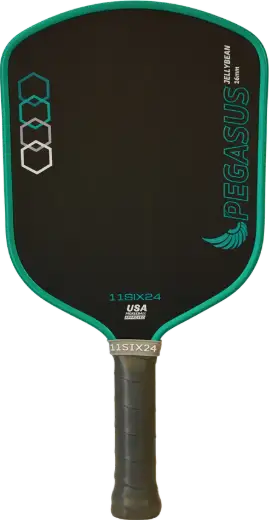 No. 1
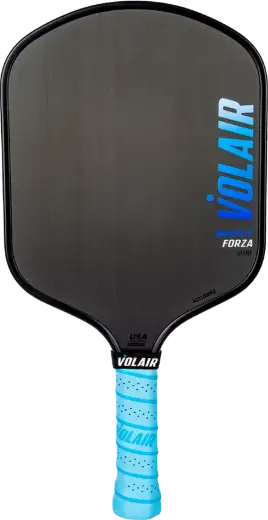 No. 2
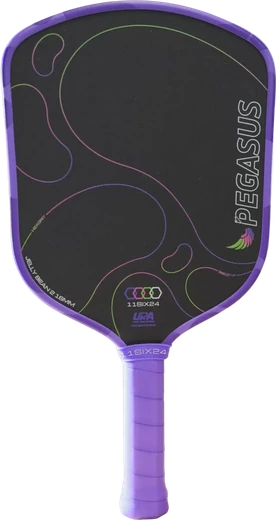 No. 3
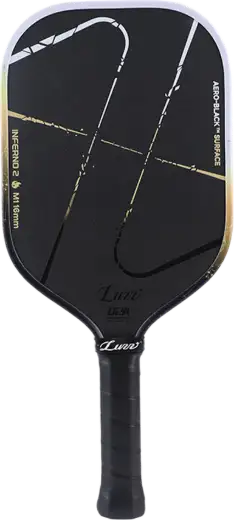 No. 2