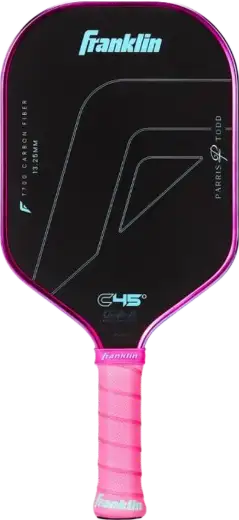
The C45 Tempo 16mm is the one to get, because no paddle you can buy today with both USA Pickleball and UPA-A approval has more control. The Franklin C45 Tempo is the widebody in Franklin's C45 line, and I'm covering both thicknesses it comes in, 14mm and 16mm. It's a Gen 3 honeycomb paddle that swings lighter than almost anything I've tested, so it's built for fast hands and an easy soft game. The trade is pace. Pop is the pace you get off short swings at the net, and power is the pace you get off full swings like drives and serves. The Tempo's pop is near the bottom of everything I've tested, and the 16mm has clearly less power than the average widebody. The 16mm is where it all works, with a little more control, a little bigger sweet spot and a little more power than the 14mm at the same price. Franklin's original C45 hybrid has its own review, and this page only covers the Tempo. Both thicknesses are $229.99, or $206.99 with code STSPICKLEBALL. I earn a commission when you use my codes.
Every version, side by side
| Out of 100 | C45 Tempo 16mm$206.99 with code · widebody | C45 Tempo 14mm$206.99 with code · widebody |
|---|---|---|
| Power | 49DLeads by 6 | 43D |
| Pop | 30F | 32F |
| Spin | 49DLeads by 15 | 34F |
| Sweet spot | 83ALeads by 9 | 74B |
| Control | 81ALeads by 9 | 72B |
| Swing weightlower is quicker | 102.5 | 101.8 |
| Twist weighthigher is steadier | 6.57 | 6.18 |
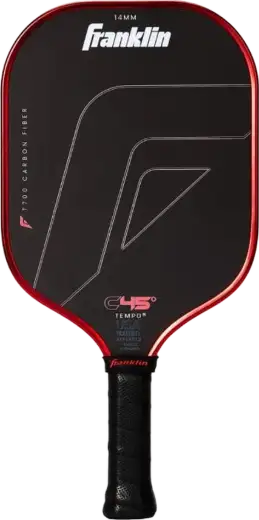
Tempo 16mm
$206.99with code STSPICKLEBALL
list price $229.99Code STSPICKLEBALL takes 10% off. Enter it at checkout.
Tempo 14mm
$206.99with code STSPICKLEBALL
list price $229.99Code STSPICKLEBALL takes 10% off. Enter it at checkout.
Pros and cons
Pros
- The 16mm scored 81 out of 100 for control, and no paddle you can buy with both USA Pickleball and UPA-A approval has more.
- Both thicknesses feel really quick in your hands. Only five paddles I've tested swing lighter than the 16mm, and only one swings lighter than the 14mm.
- The 16mm's sweet spot scored 83 out of 100, the same as the average widebody's. That's a lot of forgiveness on off-center contact in the soft game for a paddle this light.
- The Tempo's face adds so little pace on short swings that a dink or reset leaves it at about the speed you give it, so a slightly heavy touch still stays low.
Cons
- The 16mm scored 30 out of 100 for pop, and only 11 paddles I've tested have less. Counters and speed-ups won't jump off the face.
- The 16mm scored 49 out of 100 for power, clearly less than the average widebody, so drives and serves take a full swing.
- The 16mm spun 2,210 RPM in my spin test, less than the average widebody, and there's no grit on the face.
- The 5.1 inch handle is too short for most two-handed backhands.
Quick answers
Franklin C45 Tempo 14mm or 16mm?
The 16mm. It has a little more control, 81 out of 100 against 72 on the 14mm, and a little bigger sweet spot, 83 against 74. It also has a little more power, 49 against 43. Pop, spin and swing weight come out about the same. Swing weight is how heavy the paddle feels when you swing it, lower means faster hands. The 16mm's face is steadier, with a twist weight of 6.57 against 6.18. Twist weight is how much the face resists twisting when you miss the center. The 14mm only edges the 16mm on swing weight and pop, and both gaps are about the same, so I'd get the 16mm.
Is the Franklin C45 Tempo a control paddle?
The 16mm is. Its control score of 81 is a little more than the average widebody's 76, and its power score of 49 is clearly less than the average widebody's, which is about 65. The 14mm leans the same way but less.
C45 Tempo or C45 hybrid?
The Tempo 16mm, unless you want a longer handle. Next to the C45 hybrid, the Tempo 16mm has a far bigger sweet spot, 83 out of 100 against 46, and clearly more control, 81 against 70. It has a little more power, 49 against 44, and pop and spin come out about the same. It also swings a little lighter, with a swing weight of 102.5 against 107.1. The hybrid's 5.7 inch handle has room for two hands, and the Tempo's 5.1 inch handle doesn't. Price, build and approvals are the same on both.
How much does the Franklin C45 Tempo weigh?
Franklin lists the 16mm at 7.6 to 8.0 ounces, with a swing weight of 99 and a twist weight of 6.7. I measured a swing weight of 102.5 and a twist weight of 6.57, so it swings a little heavier than Franklin says. Franklin lists the 14mm at 7.5 to 7.9 ounces, with a swing weight of 98 and a twist weight of 6.6. On the 14mm, I measured a swing weight of 101.8 and a twist weight of 6.18, so it also swings a little heavier than listed, and it twists more than Franklin's number suggests.
One of the lightest swings I've tested, with a face that wants a little weight
So, what you feel first with the Tempo is how fast it is. The 16mm's swing weight of 102.5 is clearly lighter than the average widebody's, which is about 109, and only five paddles I've tested swing lighter. The 14mm is even quicker at 101.8, and the only paddle I've tested that swings lighter is Franklin's own FS Tour Featherweight Tempo. Less mass to get moving means the paddle face gets to the ball first in quick exchanges at the kitchen.
The cost of that light swing is stability. The 16mm's twist weight of 6.57 is lower than the average widebody's, which is about 6.9, so hard drives can push the face around on blocks. The 14mm is twistier still. Its twist weight of 6.18 is lower than all but three widebodies I've tested. That's why the Tempo plays its best with tape at 3 and 9 o'clock, which steadies the face on off-center hits. And because it starts so far under the average widebody's swing weight, you have room to add that weight and still keep quick hands.
The feel is predictable. The C45 build doesn't feel hollow, and the ball comes off the face the same way from shot to shot, so you learn quickly how hard to hit a drop. There's a little dwell too, where the ball sinks in a bit before it comes off.
Easy dinks and resets, but you bring the pace
How its spin stacks up against other widebodies you can buy
Less spin than most widebodies, 63 RPM below the average
The top three for spin
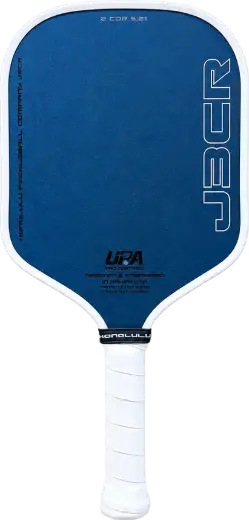
- 1Honolulu J3CR Crystal Blue2,436
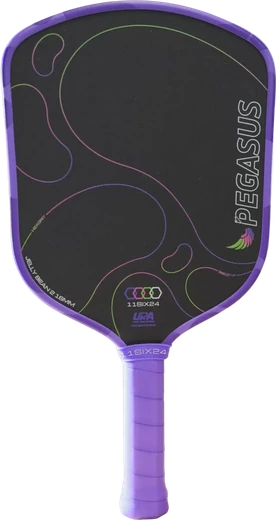
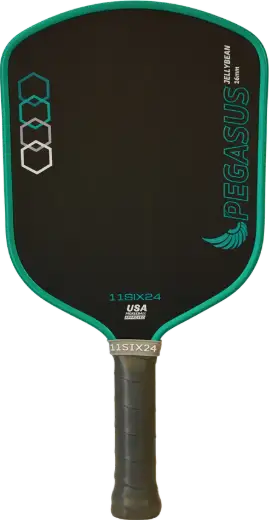
- 211SIX24 Pegasus Jelly Bean 22,37561 RPM behind
- 3RPM Q2 Widebody2,36967 RPM behind
- 39Franklin C45 Tempo2,210226 RPM behind
Dinks, resets and third-shot drops
This is why you buy a Tempo. Control and sweet spot are my scores from the same ball-machine dink, drop and reset drills every paddle gets. The 16mm scored 81 for control, and only 29 paddles I've tested have more. It's not a springy face, so a reset off a hard drive comes off slow and lands short, and a dink you push a little too hard still stays low.
The 14mm scored 72 for control, which is about the same as the average widebody. It's still easy to dink with, but it doesn't give you the extra margin the 16mm does.
Mishits
The 16mm's sweet spot scored 83 out of 100, the same as the average widebody's. That's a lot of forgiveness for a paddle this light. The 14mm's sweet spot scored 74, a little smaller than the average widebody's, so it wants cleaner contact.
Speed-ups and counters
The Tempo has very little pop. The 16mm scored 30 out of 100 for pop and the 14mm scored 32, both far less than the average widebody's, which is about 79. Only 11 paddles I've tested have less pop than the 16mm. Franklin pitches that PowerFlex honeycomb core as adding pop, but my numbers don't show it on the Tempo.
So the Tempo wins hands battles with speed, not pace. Its light swing gets your paddle up first, but a counter off this face won't blow past anyone, so aim it at the hip or the feet instead of trying to out-hit the other player.
Drives, serves and put-aways
Drives are the weak side. The 16mm scored 49 out of 100 for power, clearly less than the average widebody, and only 50 paddles I've tested score lower. The 14mm scored 43, far less than the average widebody. There isn't much mass behind a full swing, so the pace on drives and serves has to come from you. Adding weight at the sides helps a little, but it won't turn the Tempo into a power paddle.
Spin doesn't make up for it. The 16mm spun 2,210 RPM in my spin test and the 14mm spun 2,177 RPM, and both are less spin than the average widebody, which comes in at about 2,273 RPM. Franklin says laying the T700 carbon at a 45 degree angle gives the face an even texture that maximizes spin, but my numbers don't back that up on the Tempo. There's no grit on the face, so a topspin drive won't dip as fast as it would off a gritty paddle.
How it feels in your hand next to other widebodies you can buy
Quick in your hands, a little less steady when you miss the middle
How heavy the paddle feels when you swing it. A lower number swings quicker.
Only five widebodies you can buy swing lighter.

How much the paddle fights twisting when you miss the middle. A higher number is steadier.
Less steady than most widebodies.
How its sweet spot stacks up against other widebodies you can buy
An average-size sweet spot for a widebody
Both rings are sized to their score.
The 16mm beats the 14mm, so there's no reason to go thinner
The two thicknesses swing, spin and pop about the same. Everything else goes to the 16mm, with a little more control, a little bigger sweet spot, a little more power and a steadier face.
That's a little unusual, since a thinner core usually buys you more pace. Here the 14mm gives up control and forgiveness and doesn't get any extra pace back.
Price, build, size, handle and warranty are the same on both. Can't decide? Get the 16mm.
The C45 build in a shorter, wider shape
The Tempo shares its build with the rest of the C45 line. It's a Gen 3 thermoformed unibody with a polypropylene honeycomb core, which Franklin calls PowerFlex, an EVA foam insert and foam around the perimeter, under a raw T700 carbon fiber face with a raw peel-ply texture. The guys over at Franklin say they designed the C45 to cut down on break-in, where a Gen 3 paddle gets livelier and more powerful as it breaks in. Franklin says it does that with a two-step thermoforming process and a dual foam edge wall around a honeycomb that isn't compressed.
The Tempo is 15.7 inches long and 7.9 inches wide, which makes it shorter and wider than the C45 hybrid and the C45 Dynasty. Franklin calls the shape traditional. Its 5.1 inch handle is shorter than the hybrid's and the Dynasty's too, which is why the Tempo suits one-handed backhands. If you hit a two-hander, the C45 hybrid's 5.7 inch handle has the room.
The warranty is one year.
Approved by both, in stock at Franklin, with thin owner feedback
The Tempo 14mm and 16mm are both on USA Pickleball's approved paddle list, and both were added on April 17, 2025. Franklin's product page says both thicknesses are approved by USA Pickleball and UPA-A. So either thickness works for USA Pickleball sanctioned events and for UPA-A events like PPA qualifiers.
As of October 21, 2026, Franklin's C45 page lists the Tempo in 14mm and 16mm at $229.99 and shows it in stock. Franklin released the Tempo in June 2025, alongside the C45 Dynasty.
Owner reports on the Tempo itself are thin, and the retailer pages I checked had no customer reviews on it. One player who demoed the 16mm in 2025 called it lightning fast and said the hand speed was what stood out. No defect shows up across three or more owner reports on either thickness.
C45 Tempo 16mm or JOOLA Scorpeus Pro IV 16mm?
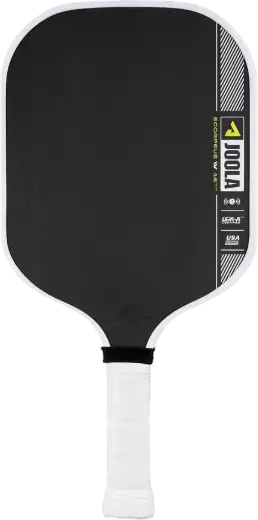
The Scorpeus Pro IV is the paddle I'd weigh the Tempo against first. It's a 16mm widebody with both USA Pickleball and UPA-A approval and the same kind of core, a polypropylene honeycomb with an EVA foam insert and perimeter foam. It's $149.95 with no code, since JOOLA doesn't take them, so it's $57.04 less than the Tempo 16mm after the code.
On the soft game, they're about even. Control is about the same, 80 out of 100 on the Scorpeus Pro IV against 81 on the Tempo, and the sweet spots are about the same, 86 against 83.
The difference is pace against hand speed. The Scorpeus Pro IV has far more power, 85 against 49, and far more pop, 55 against 30. It spins more, too, 2,279 RPM against 2,210 RPM, and its face is steadier, with a twist weight of 7.34 against 6.57. What the Tempo gives you is the swing. The Scorpeus Pro IV swings clearly heavier, with a swing weight of 110.8 against 102.5, so the Tempo gets to the ball faster in hands battles.
A couple of things sit outside my scores. JOOLA's warranty is six months, or 12 months if you register the paddle's NFC tag, and Franklin's is one year. The Scorpeus Pro IV's 5.25 inch handle is a little longer than the Tempo's 5.1 inch handle, but it's still tight for two hands.
So if hand speed is your whole game and you want the lightest swing you can get with both approvals, get the Tempo 16mm. If you want the same control and sweet spot with real pace on drives and counters, the Scorpeus Pro IV is the better buy, and it costs $57.04 less.
Where I'd look instead, for more pace or less money
Two paddles you might pick instead
How it stacks up against the Bantam ESQ-C and the Harmony V
A paddle only wins a score when it leads by 5 points or more.
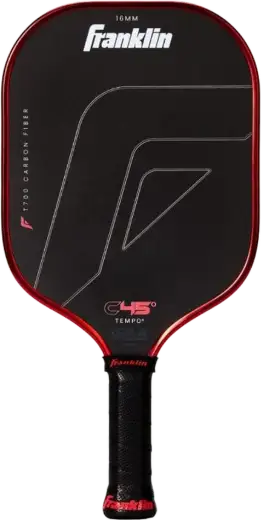 C45 TempoWidebody · $206.99
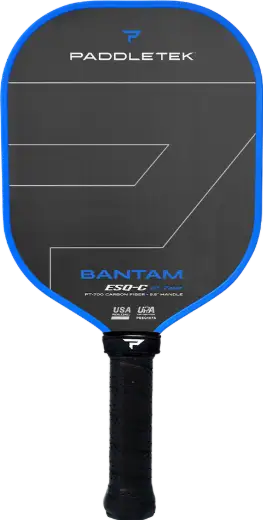 Bantam ESQ-CWidebody · $179.99
The C45 Tempo has a bigger sweet spot and is more controllable. The Bantam ESQ-C hits harder, has more pop and spins more. The Bantam ESQ-C costs about $27 less.
C45 TempoWidebody · $206.99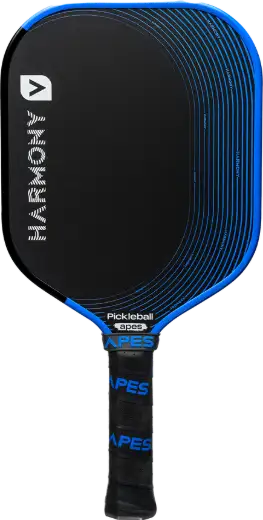 Harmony VWidebody · $71.99
The Harmony V has more pop, spins more, has a bigger sweet spot and is more controllable. Power is about the same. The Harmony V costs about $135 less.
With both approvals
PaddleTek Bantam ESQ-C 12.7mm, $199.99, or $179.99 with code STSPICKLEBALL. If you want the Tempo's light swing with more pace, this is the one. It's $27.00 less than the Tempo 16mm after the codes, and its swing weight of 102.3 is about the same as the Tempo 16mm's 102.5. It has far more pop, 65 out of 100 against 30, far more spin, 2,325 RPM against 2,210 RPM, and clearly more power, 63 against 49. You give up some of the soft game, with a clearly smaller sweet spot, 71 against 83, and a little less control, 76 against 81. It's a cold-pressed honeycomb paddle, its 5.5 inch handle is a little longer than the Tempo's, and PaddleTek covers it with a lifetime warranty. It fits fast-hands players who want both approvals and more help in hands battles.
For USA Pickleball players only
Pickleball Apes Harmony V 16.5mm, $79.99, or $71.99 with code STSPICKLEBALL. If you only play USA Pickleball events, this is the better control paddle for a lot less money. It's $135.00 less than the Tempo after the codes. It has clearly more control, 92 out of 100 against 81, a little bigger sweet spot, 90 against 83, and clearly more pop, 44 against 30. Power is about the same, 52 against 49, and it spins more, 2,261 RPM against 2,210 RPM. It swings a little heavier, with a swing weight of 106.0 against 102.5, but its face is steadier, with a twist weight of 7.33 against 6.57. It's a honeycomb paddle approved by USA Pickleball only, with a 5.5 inch handle and a one-year warranty.
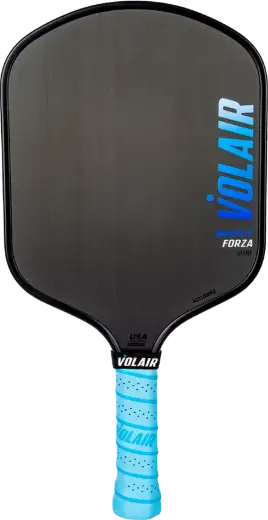
Volair Mach 2 14mm, $69.99, or $62.99 with code STSPICKLEBALL. This one matches the Tempo's swing for a fraction of the price. It's $144.00 less than the Tempo after the codes. Swing weight is about the same, 102.1 against 102.5, and control and sweet spot match too, 81 and 84 against the Tempo 16mm's 81 and 83. It has far more pop, 63 out of 100 against 30, so counters come off the face faster. What you give up is power, since it scored 5 out of 100 for power against the Tempo's 49, so drives take everything you've got. It's a cold-pressed honeycomb paddle approved by USA Pickleball only, with a 5.5 inch handle and a one-year warranty. It fits soft-game players with fast hands who don't drive much.
Get the 16mm if you win with fast hands and touch, and skip the Tempo if you need help with pace
If your game is dinks, resets and quick hands at the kitchen, you play under both USA Pickleball and UPA-A, and you hit a one-handed backhand, the Tempo 16mm is my pick. No paddle you can buy with both approvals has more control, and only five paddles I've tested swing lighter. Plan on adding a little weight at the sides to steady the face.
Skip the Tempo if you win with drives and counters, because the 16mm scored 49 out of 100 for power and 30 for pop. If you want the same control with real pace and don't need the lightest swing, the JOOLA Scorpeus Pro IV does that for $57.04 less. Skip it if you hit a two-handed backhand, since the 5.1 inch handle is too short. And skip the 14mm, because the 16mm gives you more for the same price.
Testing details
- Tested, Tempo 16mm
- May 9, 2026
- Tested, Tempo 14mm
- May 9, 2026
- Power and pop
- 20 full serves for power and 20 punch volleys for pop, every ball speed read on a Stalker radar gun.
- Spin
- 20 more serves on the radar. I drop the outliers and average the rest.
- Swing and twist weight
- Measured on a Briffidi SW1 swing weight machine.
- Sweet spot and control
- The same dinks, drops, resets and drives off a Titan ONE ball machine, for every paddle.
- The scores
- Out of 100, with the same tests for every paddle. The top paddles I've tested score 100.
- Published
- Scores from
- My database, updated October 21, 2026. How I test
 No. 1
 No. 2