The Harmony V is Pickleball Apes' honeycomb widebody, and if you win with drops, dinks and resets more than power, it's the cheapest way I know to get elite control. Only two paddles you can buy score higher than its 92 out of 100 for control, and both cost more. With my code STSPICKLEBALL, it's $72. It's forgiving too, with a big sweet spot and a face that stays steady when you miss the center.
The catch is pace. It has a lot less pop than the average widebody, so your counters and speedups won't put people on their heels the way a poppier paddle would. If you like to win points with quick hands at the net, that's going to bug you. For a player like that, I'd look at Enhance's MPP Turbo ArmorGrit Widebody, a foam widebody that swings about as light and hits a lot harder.
Pros and cons
Pros
- It has elite control, so your drops, dinks and resets stay low.
- The sweet spot is big and the face hardly twists, so an off center block still goes where you aimed it.
- It swings lighter than most widebodies, so it's quick in your hands for a paddle this forgiving.
Cons
- There's very little pop and below average power, so if you like to counter, speed balls up or drive from the baseline, you'll be bringing the pace yourself.
- It's marked down right now, and Pickleball Apes' policy rules out returns on sale items. The Harmony page isn't marked Final Sale, but ask the store first if you might send it back.
Quick answers
Is the Harmony V good for beginners?
Yes. It's No. 9 on my beginners list, because the control and forgiveness make the soft game easier to learn. The one thing it won't do is give you free pace. My No. 1 for beginners is 11SIX24's original Pegasus Jelly Bean, an older control widebody I get to below. For $18 more, you get more pop on quick punches, though less power on full swings.
Does the Harmony V have enough power?
If you win with placement and don't mind taking a full swing on your drives, there's enough. If you want the paddle to add the pace and end points for you, it'll feel underpowered.
Should I get the Harmony V, X or S?
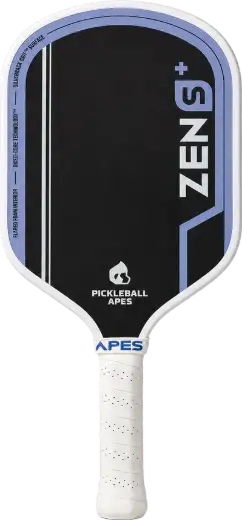
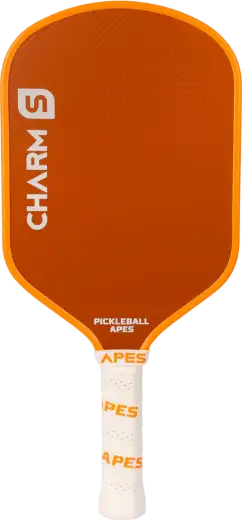
I'd get the V. It's the one with the standout control and sweet spot. The X is the elongated, so it's the one for extra reach. Its control is a lot higher than the average elongated's, and its power is a lot lower. The S is the hybrid, and I'd skip it, because its control is only about average for a hybrid and its sweet spot is a lot smaller than the V's.
Is the Harmony V USA Pickleball approved?
Yes. USA Pickleball listed it in June 2025, so you can play it in their sanctioned tournaments, and the new spin test it started in October 2026 only covers paddles submitted after that. UPA-A hasn't listed it, which only matters if you play PPA or MLP pro events.
How I tested
Sweet spot and control matter most on a paddle like this, and I rate both on the dinks, drops and resets my ball machine feeds me. The rest is measured. The ball speed behind the power and pop scores comes off my Stalker Pro 3S radar, which also reads serve spin in RPM, and my Briffidi SW1 gives me swing weight and twist weight. Those tell you how heavy a paddle feels on the swing and how much its face resists twisting on a mishit. Every paddle gets the same tests, 254 of them so far, and any rank on this page counts only the 186 you can still buy.
The one test it hasn't had is my wear test. That's 75 games on a paddle, with my Starrett SR160 roughness tester tracking how fast the face goes smooth.
Elite control and a big sweet spot
Your drops come down into the kitchen instead of floating, your dinks stay short, and a reset off a hard drive dies near the net instead of sitting up. It's really predictable too, so when a soft shot misses, it's usually your swing and not the paddle. That's exactly what you want when you're still learning the soft game, or when your whole plan is to outlast people at the kitchen. Its control score is 92 out of 100, which is why it's No. 3 on my best control paddles list.
The sweet spot scored 90, which puts it in the top ten of the paddles you can buy, so a ball you catch a little off center still comes off clean. The face is very stable too. When you block a hard drive on a mishit, it doesn't twist away from you, and the block stays on line instead of flying wide.
All that forgiveness comes in a paddle that swings light for a widebody, so it's easy to whip around in a fast exchange. That also leaves room to add lead tape if you ever want more plow through. I'd play it stock first, though. Pickleball Apes won't take a paddle back with tape on it.
How it feels in your hand next to other widebodies you can buy
Quick in your hands, and steadier than most when you miss the middle
How heavy the paddle feels when you swing it. Lower means faster hands.
Only nine widebodies you can buy swing lighter.

How well the paddle resists turning in your hand when you hit off center. Higher means steadier.
Only four widebodies you can buy are steadier.
How its sweet spot stacks up against other widebodies you can buy
Only nine widebodies you can buy have a bigger sweet spot
Both rings are sized to their score.
You supply the pace
When someone dinks one up and you punch it at their feet, the ball comes off slower than you'd expect, and your counters in a hands battle don't have much on them. That's the low pop showing. Only six widebodies have less, and the Harmony's pop score is 44 out of 100. Power is a good bit below the average widebody too, so drives and serves need a full swing to get deep.
But that same low pop is also why your blocks and resets die so easily.
Spin is average, on a plain carbon face
How its spin stacks up against other widebodies you can buy
About average spin for a widebody, 12 RPM below the average
The top three for spin
- 1Honolulu J3CR Crystal Blue2,436
- 211SIX24 Pegasus Jelly Bean 22,37561 RPM behind
- 3RPM Q2 Widebody2,36967 RPM behind
- 27Pickleball Apes Harmony V2,261175 RPM behind
Spin scored 68 out of 100, about average for a widebody, so your drives and serves get normal spin, just nothing extra. That's on a bare raw carbon face, though, with nothing on top to help the texture last.
I haven't wear tested the Harmony itself, so I can't tell you how its face holds up. What I can tell you is that raw carbon in general has lost about 18% of its spin over 75 to 100 games in my testing. One owner on Pickleball Apes' site said the texture really drops off after about 40 to 50 hours, though an owner of the X said theirs was holding up well. So I'd expect the spin to fade some the more you play it.
How it feels
Contact feels dense and solid, not hollow like Pickleball Apes' older Pulse, and it isn't jarring on a hard drive or mushy on a dink.
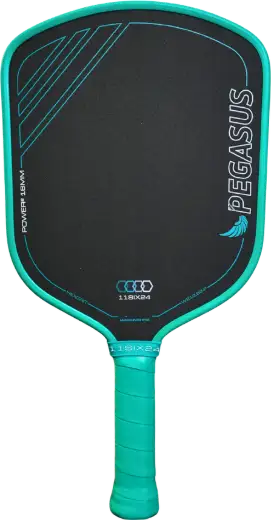
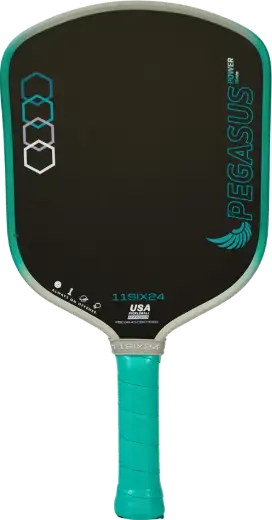
The original Pegasus Power has a bigger sweet spot for $18 more
This is the original Pegasus Power, not the Pegasus Power 2. 11SIX24 put it out in early 2025 as the honeycomb widebody in its Power series, next to the Vapor Power and Hurache-X Power. On paper it beats the Harmony on sweet spot, pop and power. Its sweet spot is a bit bigger, and it's the biggest you can get under $100. It also has a lot more pop and a good bit more power than the Harmony, though its pop and power are still only about average for a widebody. Its control score is about the same, but that extra pop means your resets come off with more pace, so they take softer hands. Even so, when I reviewed the Power series back then, I said drops, resets and transition shots felt better on the Pegasus than on just about any other power paddle, with a really plush feel off the face.
Where the Harmony wins is the lighter swing, so it's easier to move fast at the net. You also get twice the warranty. Both are very stable on off center hits, and both have raw carbon faces, so neither one has a grit built to last. A couple of owners on 11SIX24's site said theirs went smooth after about a year of play. The Pegasus Power is $90 with code STSPICKLEBALL, and on November 7, only the teal one was in stock. That's where I'd put the extra $18 if you want a bigger sweet spot and more on your punches and don't mind a heavier swing.
Before you order
When I checked on November 7, 2026, Pickleball Apes had all three Harmony shapes in stock at $80, marked down from $180, which comes to $72 with my code. It also sells blemished Harmonies for $55. Six owners who bought a blemished V said they couldn't even find the flaw, so if looks don't matter to you, that's an easy way to save more.
The return policy is the part to read twice. You get a 30 day demo window, and Pickleball Apes will only take the paddle back with slight signs of use and nothing added, so no lead tape and no overgrip. Its policy also says sale items can't be returned, and it marks those as Final Sale. The Harmony page doesn't carry that mark, but it is marked down, so if you think you might return it, check with Pickleball Apes first. The warranty covers defects for 12 months and doesn't cover the face texture wearing down.
What owners are saying
I read the owner reviews on Pickleball Apes' site on November 7, 2026. There are 81 reviews across the three shapes and the blemished ones, and what the V owners talk about most is how easy it makes the soft game. Nine of them called out its control, touch or forgiveness, and one said it helped them block hard hitters with ease.
Across the whole line, two owners said it was easier on the elbow and six said it suits newer players. On the other side, five said it doesn't hit hard, which fits my numbers. Back in April, an owner of the S, the hybrid, had the edge come away from the face more than once, and Pickleball Apes replaced it each time. None of the V owners reported that.
Three more paddles to consider
Two paddles you might pick instead
How it stacks up against the Mach 2 Forza and the Pegasus Jelly Bean
A paddle only wins a score when it leads by 5 points or more.
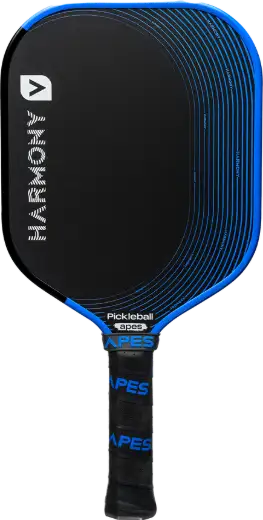 Harmony VWidebody · $71.99
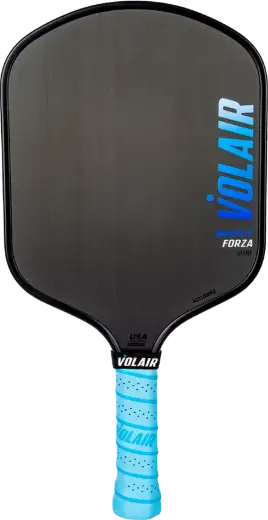 Mach 2 ForzaWidebody · $107.99
The Harmony V hits harder and spins more. The Mach 2 Forza has more pop and is more controllable. Sweet spot is about the same. The Mach 2 Forza costs about $36 more.
Harmony VWidebody · $71.99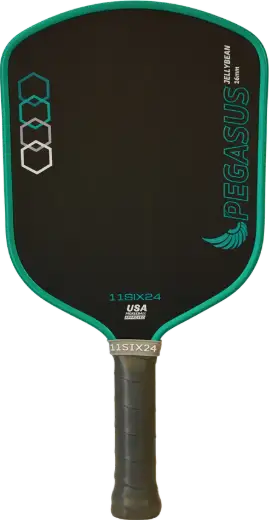 Pegasus Jelly BeanWidebody · $89.99
The Harmony V hits harder. The Pegasus Jelly Bean has more pop. Spin, sweet spot and control are about the same. The Pegasus Jelly Bean costs about $18 more.
Volair Mach 2 Forza 16mm: the most control I've tested
Volair's Mach 2 Forza widebody came out in late 2023, and the 16mm version scored 100 out of 100 for control. Next to the Harmony V, the 16mm has about the same sweet spot, a bit more control and a lot more pop. You'll give up a good bit of power, though, and it swings a bit heavier. Volair had it only in pink on November 7, and it's $108 with code STSPICKLEBALL. Sending it back costs you, too, since Volair takes $20 off the refund on any return.
11SIX24 Pegasus Jelly Bean: my No. 1 for beginners
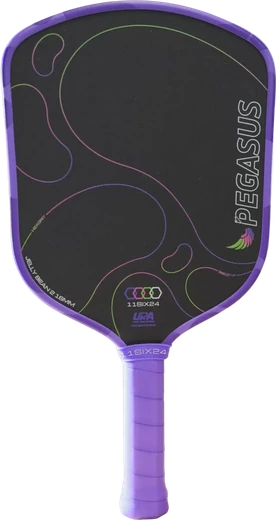
The original Pegasus Jelly Bean is the control widebody 11SIX24 made before the Pegasus Jelly Bean 2. I'd hand it to a new player first, and it has the most control you can get under $100. Control and sweet spot are right with the Harmony's, and it has a good bit more pop. The cost is less power, and it's not quite as steady on a mishit. It was $90 on November 7, and 11SIX24's sale page says the original Jelly Beans are there while supplies last.
Enhance MPP Turbo ArmorGrit Widebody: real pace and more spin
Enhance's MPP Turbo ArmorGrit Widebody came out in 2026 with ArmorGrit, a coating over the carbon meant to make the texture last longer. It's my pick if the Harmony V feels too slow. It hits a lot harder and pops a lot more, so your drives and counters come off with real pace, and it spins a good bit more too, with about as big a sweet spot. The trade is a good bit less control, so your drops and resets take softer hands, and it's a bit less stable on off center hits. Whether the coating really lasts is still open. Around 20 to 25 games into my wear test in mid October, it was wearing a bit quicker than HexGrit and Honolulu's Crystal Blue, the two grits that have barely worn for me, but not as fast as Selkirk's InfiniGrit. With code STSPICKLEBALL it's a penny under $100, and it was in stock on November 7.
My call
For top-end control without spending much, I'd get the Harmony V. It's forgiving, it's steady on off center hits, and $72 gets you more control than almost any paddle at any price. It's a great paddle to learn the soft game with, and just as good for anyone who'd rather out-dink people than out-hit them.
If you're new to the game and can spend $18 more, I'd start with the original Pegasus Jelly Bean instead, since it has about the same control and more pop. For real pace, the ArmorGrit widebody is the one. And if the Harmony's control still isn't enough, the Mach 2 Forza 16mm is where I'd go.
Testing details
- Tested
- September 3, 2026
- Power and pop
- 20 full serves for power and 20 punch volleys for pop, every ball speed read on a Stalker radar gun.
- Spin
- 20 more serves on the radar. I drop the outliers and average the rest, which gave this paddle 2,261 RPM.
- Swing and twist weight
- Measured on a Briffidi SW1 swing weight machine.
- Sweet spot and control
- The same dinks, drops, resets and drives off a Titan ONE ball machine, for every paddle.
- The scores
- Out of 100, with the same tests for every paddle. The top paddles I've tested score 100.
- Published
- Updated
- Scores from
- My database, updated November 8, 2026. How I test
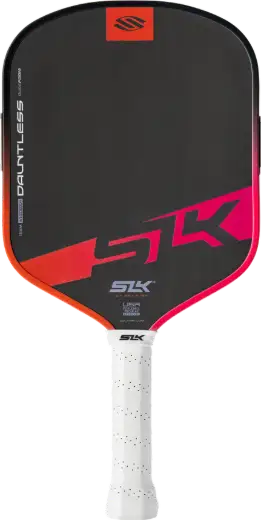 No. 4
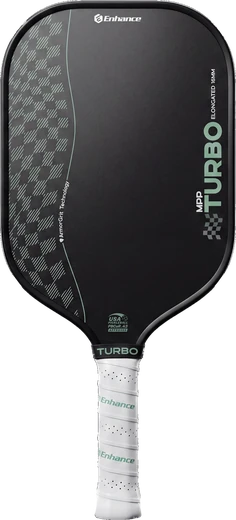 No. 1
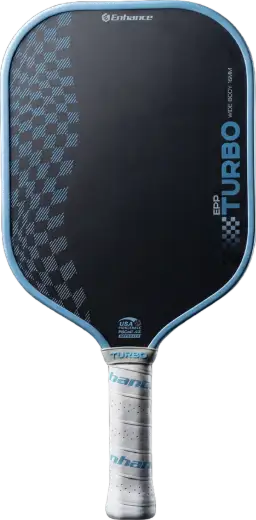 No. 2