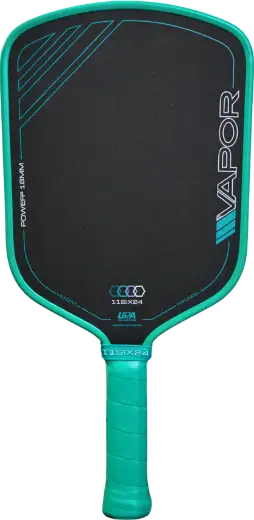
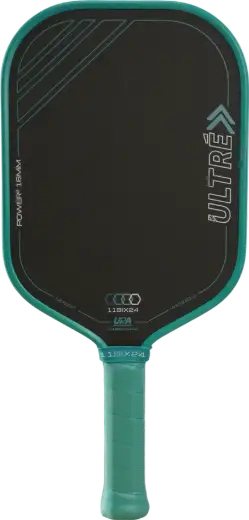
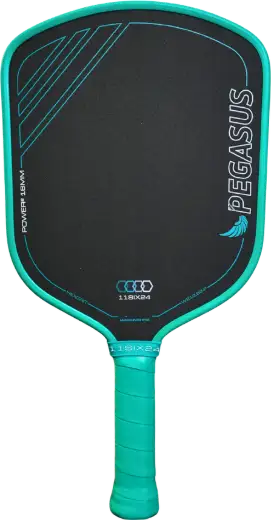
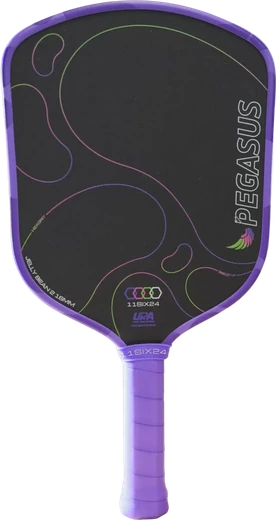
The original Pegasus Power is 11SIX24's honeycomb widebody from 2025, and the best thing about it is the sweet spot. Only two paddles I've tested have a bigger one. So if you want a really forgiving widebody with more control than most and still some pace on your shots, this is the one I'd get, and it's $90 with my code. The catch is that even with Power in the name, it hits about as hard as an average widebody, and its raw carbon face loses spin as it wears. 11SIX24 also has the newer Pegasus Power 2 on sale for $99.99 through December 4, 2026, so further down I'll help you pick between the two.
Pros and cons
Pros
- The sweet spot is huge, so balls you catch near the edge still land where you meant them to.
- Its control is a good bit above the average widebody's, so soft shots are easier to keep down.
- At $90 with my code, it's one of the cheapest ways to get this much forgiveness.
Cons
- It only hits about as hard as the average widebody on a full swing, and its pop, the pace on quick shots at the kitchen, is about average too. If you want to win points with big drives and fast hands, a widebody with more power and pop will suit you better.
- There's no durable grit on the raw carbon face, so the spin fades as you play. That matters most if your game leans on topspin drives and rolls.
- It swings a bit heavier than most widebodies, so it's not the quickest paddle in fast hands battles at the net.
Quick answers
Is the Pegasus Power actually a power paddle?
Not by my numbers. Its power and pop both land right around the average for a widebody, so it plays more like a forgiving all-court widebody with a little extra pace. It isn't a true power paddle.
Should I get the Pegasus Power or the Pegasus Power 2?
If control and USA Pickleball approval matter most to you, go with the original. The Power 2 is the one for a lot more power and pop, as long as you don't play USA Pickleball tournaments, and it's a great deal while it's $99.99. I go through it below.
Is the Pegasus Power good for beginners?
Yes. A sweet spot this big forgives a lot of mishits, and the control keeps the ball low while you learn. If you're brand new, also look at the original Pegasus Jelly Bean. It's 11SIX24's softer honeycomb widebody from 2025, and it tops my beginners list.
Is the Pegasus Power USA Pickleball approved?
Yes, it's approved by USA Pickleball, so you can use it in sanctioned tournaments and pretty much any league or club. It isn't on the UPA-A list, the approval PPA and MLP pro events use.
How I tested the Pegasus Power
The numbers on this page come from the same test session every paddle gets. The radar, a Stalker Pro 3S, gives me power, pop and spin. A Briffidi SW1 gives me swing weight and twist weight, in other words how heavy it feels on a swing and how steady it stays when you catch one off center. My sweet spot and control scores come from the ball machine. I first reviewed it in February 2025 with the rest of 11SIX24's Power series, the Vapor Power and the Hurache-X Power.
One of the biggest sweet spots I've tested
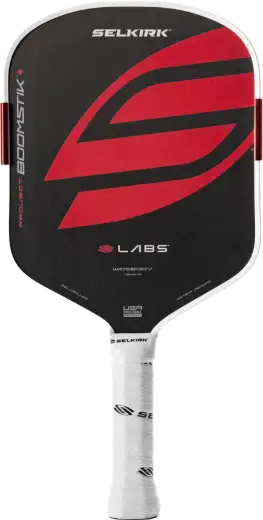
Its sweet spot scored 97 out of 100, and only two paddles I've tested beat it. One is the Pegasus Power 2, and the other is the Boomstik Widebody, Selkirk's big power widebody. Both normally cost more than twice as much.
On the court, that means you lose fewer points to your own mishits. When you're stretched out and catch a dink or a block near the edge, it still has a good chance of landing in. When I reviewed the Power series at launch, I said its paddles had some of the best sweet spots for their shape of any paddles out there, and my numbers back that up.
Its twist weight is also in the top quarter of widebodies, so when you block a hard drive off center, the face holds steady.
Real control for a widebody
Control is the other thing this paddle does really well. It scored 88 out of 100, and only four widebodies have more. You notice it most on resets from the middle of the court, where a ball that would float up on a lot of paddles stays down.
Back in my February 2025 review, I said drops, resets and the midcourt game felt so much better on the Power series paddles than on just about any other power paddle at the time, especially the Pegasus. If you want even more control without spending more, the original Jelly Bean below gives you that.
Power and pop: about average for a widebody
You get enough pace for a solid drive or a put-away, but this isn't a paddle that adds power for you. Power scored 64 out of 100, right in the middle for a widebody, and on counters and speed-ups it gives you a normal amount of pace, nothing extra.
How it feels in your hand next to other widebodies you can buy
Heavier in your hands, steadier than most when you miss the middle
How heavy the paddle feels when you swing it. Lower means faster hands.
Swings heavier than most widebodies.
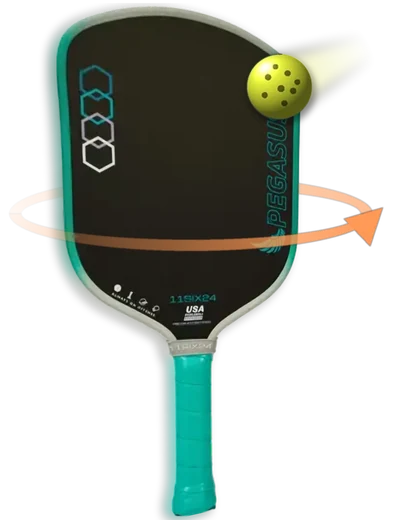
How well the paddle resists turning in your hand when you hit off center. Higher means steadier.
Only seven widebodies you can buy are steadier.
How its sweet spot stacks up against other widebodies you can buy
Only two widebodies you can buy have a bigger sweet spot
Both rings are sized to their score.
Spin fades on a raw carbon face
How its spin stacks up against other widebodies you can buy
More spin than most widebodies, 28 RPM above the average
The top three for spin
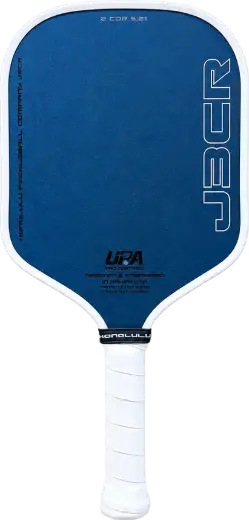
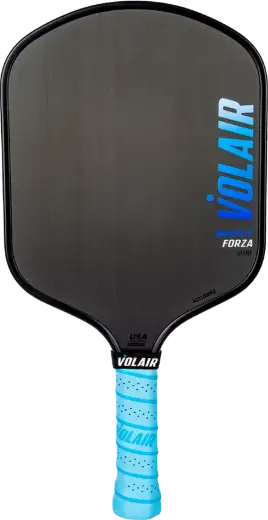
- 1Honolulu J3CR Crystal Blue2,436
- 211SIX24 Pegasus Jelly Bean 22,37561 RPM behind
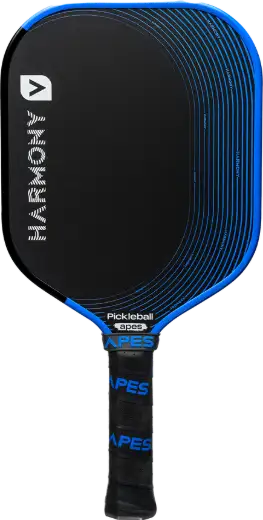
- 3RPM Q2 Widebody2,36967 RPM behind
- 1211SIX24 Pegasus Power2,301135 RPM behind
On my serve test, its spin is about average for a widebody right now. The face is plain raw carbon with no durable grit, though, so it won't stay there.
The raw carbon paddles in my wear test lost about 14 to 20% of their spin, so your topspin drives won't dive as hard once the face wears. There was also a change at launch. The early Power series paddles 11SIX24 sent me had more grit than the ones that went on sale, and on my radar, which reads how fast the ball spins, the retail paddles came in about 100 to 120 RPM lower. I was a little harsh about it at first, but a week later I said it wasn't a bait and switch, just a finer texture. My scores here come from a retail paddle, the one you'd actually get.
A plush feel, but a heavier swing
In that February 2025 review, I also said the Pegasus Power has a really nice plush feeling off the face, and there isn't much break-in to speak of.
The one thing you'll notice is the swing. It's one of the heavier-swinging widebodies, so you can be a hair late when a hands battle speeds up. If that's where most of your points are won, Enhance's MPP Turbo ArmorGrit Widebody, a foam widebody I cover further down, swings lighter. If you hit a two-handed backhand, the Pegasus Power's 5.5 inch handle has room for it.
Pegasus Power or Pegasus Power 2?
11SIX24 put out the Pegasus Power 2 in March 2026. The shape is the same widebody, but the honeycomb core is swapped for foam, and the face has HexGrit, 11SIX24's durable grit built into the carbon.
On paper, the Power 2 wins most of the matchup. It hits a lot harder and pops a lot more, so your drives and counters come off with real pace, and it spins a good bit more on a HexGrit face that's proven in my wear test. Its sweet spot is about the same, it swings a bit lighter, and 11SIX24 covers it for a year instead of 180 days.
The original still wins on two things. The first is control, 88 against 72, so if your soft game is what you're working on, it's the easier paddle to keep the ball low with. The second is approval. The Power 2 is approved by UPA-A only, so you can't take it to USA Pickleball sanctioned tournaments, but most local leagues and clubs are fine with it.
So here's how I'd pick. If you want pace and don't play USA Pickleball tournaments, I'd grab the Power 2 while it's on sale. If you want more control, or you need USA Pickleball approval, get the original. On November 24, 2026, both were $99.99 at 11six24.com before my code, the Power 2 on sale until December 4. My code STSPICKLEBALL takes $10 off, which brings the original to $90. My Pegasus Power 2 review has the full rundown on the newer one.
What owners are saying
Most of the 253 reviews on 11SIX24's site give the Pegasus Power five stars. I read through about 30 of them there and on the Shop app in November 2026, and what came up most was pace with control. Seven owners said it gives you more pace than an all-court paddle and still keeps the ball under control. Four others called out the big sweet spot and how steady their resets felt.
The complaints were mostly about the face. Three owners wished it had more grit, and one of them said the surface looked more used than they'd like. Back in May 2026, one owner also wrote on the Power 2's page that they bought it to replace a Pegasus Power that had died, so keep that short warranty in mind.
Three paddles that beat it at something
Two paddles you might pick instead
How it stacks up against the Pegasus Jelly Bean and the MPP Turbo ArmorGrit Widebody
A paddle only wins a score when it leads by 5 points or more.
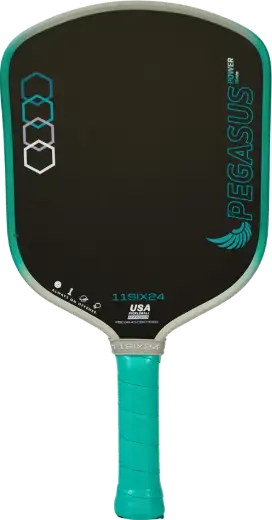 Pegasus PowerWidebody · $89.99
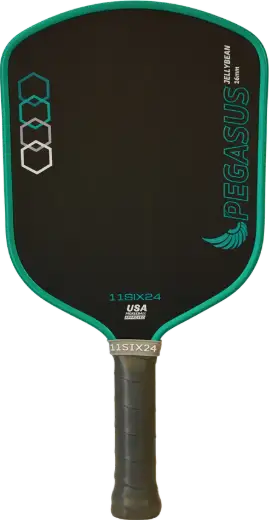 Pegasus Jelly BeanWidebody · $89.99
The Pegasus Power hits harder, has more pop and spins more. The Pegasus Jelly Bean is more controllable. Sweet spot is about the same. Same price.
Pegasus PowerWidebody · $89.99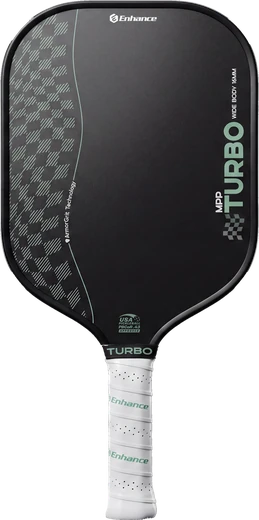 MPP Turbo ArmorGrit WidebodyWidebody · $99.99
The Pegasus Power is more controllable. The MPP Turbo ArmorGrit hits harder, has more pop and spins more. Sweet spot is about the same. The MPP Turbo ArmorGrit costs about $10 more.
11SIX24 Pegasus Jelly Bean: more control for the same money
If control is what you're after, the original Pegasus Jelly Bean has even more of it for the same money. Its control scored 95 out of 100, a bit more than the Pegasus Power's 88. Among widebodies, only one has more control than the Jelly Bean. The sweet spots are about the same size, it's a bit lighter in your hands, and its warranty runs a full year.
The trade is pace and spin. It has a lot less power, a good bit less pop and a good bit less spin, which is easier to manage if you're brand new and harder to win with once your game grows. Through December 4, 2026, it's $90 at 11six24.com before any code, the same as the Pegasus Power with my code. My review of the original Jelly Bean covers how it plays for newer players.
Enhance MPP Turbo ArmorGrit Widebody: more pace for $10 more
If you want more pace for about the same money, the ArmorGrit widebody is the one I'd look at. It has a durable grit coating, it's No. 4 on my beginners list, and it's approved by USA Pickleball. Next to the Pegasus Power, it hits a good bit harder, pops a good bit more and swings lighter, with a sweet spot that's about the same size.
What you give up is control. It has a good bit less, so your dinks and resets need softer hands. It's $99.99 with my code STSPICKLEBALL, about $10 more than the Pegasus Power.
11SIX24 Pegasus Jelly Bean 2: the same control with spin that lasts
If you want spin that holds up, the Pegasus Jelly Bean 2 has it. It's 11SIX24's softer foam widebody from 2026, with the same HexGrit face as the Power 2. It matches the Pegasus Power on control, power and pop, and its spin is a good bit higher, on a grit built to last. It sits one spot above the Pegasus Power on my widebody list.
You give up a bit of sweet spot and pay more, $160 with my code. And like the Power 2, it's approved by UPA-A only. My Jelly Bean 2 review has the full story.
My call
For a forgiving widebody with real control and some pace under $100, I'd buy the Pegasus Power. Its sweet spot is one of the biggest I've tested, your dinks and resets stay low, and you can take it to USA Pickleball tournaments. Just don't buy it for power, because it's about average there, and expect the spin to fade as the face wears. If you'd rather have pace and you don't need USA Pickleball approval, the Power 2 is the better buy while it's $99.99. And if you want spin that lasts and you're fine with UPA-A only, the Jelly Bean 2 has the same control and a HexGrit face that keeps its spin, and it costs more.
Testing details
- Tested
- June 11, 2026
- Power and pop
- 20 full serves for power and 20 punch volleys for pop, every ball speed read on a Stalker radar gun.
- Spin
- 20 more serves on the radar. I drop the outliers and average the rest, which gave this paddle 2,301 RPM.
- Swing and twist weight
- Measured on a Briffidi SW1 swing weight machine.
- Sweet spot and control
- The same dinks, drops, resets and drives off a Titan ONE ball machine, for every paddle.
- The scores
- Out of 100, with the same tests for every paddle. The top paddles I've tested score 100.
- Published
- Scores from
- My database, updated November 25, 2026. How I test
 No. 1
 No. 3
 No. 1
 No. 2
 No. 3