JOOLA's 16mm Scorpeus Pro IV is pro Collin Johns's signature widebody, and it hits harder than most elongated paddles while keeping a widebody's control. Every widebody with more control has a lot less power, so it's a rare mix, and a great buy if you want to put balls away and still trust your resets. It's down to $150 now, too, from $280 when it came out in 2025.
The catch is pop, the free pace you get on short punches and blocks at the kitchen, and this paddle has very little of it. So if you want the paddle to help you on speed-ups and counters, I'd skip it.
Both USA Pickleball and UPA-A have approved it, and UPA-A is the approval PPA and MLP pro events use, so you can take it to pretty much any tournament.
Pros and cons
Pros
- It packs more power than most elongated paddles, and its control sits right around the average widebody's.
- Very few paddles hold steadier when you catch the ball off center.
- With so little pop, blocks and resets don't jump off the face on you.
- It's $150 now, about $130 under its launch price.
Cons
- Pop is low, so if you like to speed the ball up at the kitchen, the paddle won't help you much.
- The 5.25 inch handle is tight for a two-handed backhand.
Quick answers
Is the Scorpeus Pro IV still worth buying now that the Pro V is out?
At $150, yes, for most players. I haven't tested the Scorpeus Pro V, but it costs twice as much, and it plays softer rather than hitting any harder.
What's the Anna Bright Scorpeus?
In the Pro IV line, that's the 14mm version, with the same shape and price, and it's on both approval lists too. I haven't tested the 14mm, so the scores here all come from the 16mm, Collin Johns's version, which is also the harder hitting of the two.
Should I get the Scorpeus or the Perseus Pro IV?
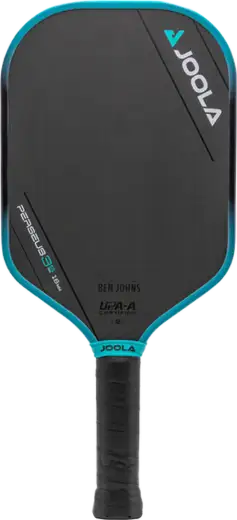
For most players, the Scorpeus. The Perseus is Ben Johns's elongated in the same Pro IV line. Next to the 16mm Perseus, the Scorpeus hits just as hard, with a lot more control and a lot bigger sweet spot, though it has a bit less pop. I go through who should still pick the Perseus below.
How I tested
I ran the Scorpeus through my usual tests. My Stalker Pro 3S radar records ball speed for the power and pop scores, and spin is the RPM the paddle put on the ball in my serve test. My Briffidi SW1 reads swing weight, meaning how quick or slow the paddle feels moving through the air, and twist weight, meaning how steady the face stays when you hit it off center. For sweet spot and control, I rate how it handles the same dinks, drops and resets off the ball machine. When I say something like only four widebodies hit harder, I'm counting the paddles I've tested that you can still buy. The paddle I tested is the 16mm, and every price and stock note is from November 2, 2026.
Power with a widebody's control
The Scorpeus hits like a power paddle, and only four widebodies hit harder. That much power usually costs a widebody some control, and each of those four has less control. The Scorpeus scored 80 out of 100 for control, close to the average widebody, so you don't give up control to get that power. It's one of only two paddles that score 80 or more for power, control and sweet spot.
On the court, that means you can drive and put balls away the way you would with an elongated, then drop back into dinks and resets and still put them where you want.
Low pop keeps the ball down
Low pop cuts both ways. When someone drives at you and you block it, or you're resetting from the transition zone, the ball comes off slow and stays low. But when you want to speed one up or win a quick counter, all the pace has to come from your swing, because the face gives you very little back. It scored 55 out of 100 for pop, a lot less than the average widebody and low for any shape.
That's why it didn't make my widebody list, since every paddle on it pops more. If you win most of your points with quick hands at the kitchen, one of those poppier widebodies will suit you better.
Stable, with a big sweet spot
It's really stable, too. Only two paddles have a higher twist weight, so when you catch a ball near the edge on a block, the face barely turns and the ball still goes where you aimed it. Its sweet spot scored 86 out of 100, about average for a widebody, which still means a big, forgiving face.
It does swing a bit heavier than the average widebody, so it isn't one of the quicker widebodies in your hands. Next to an elongated, though, it swings lighter.
How it feels in your hand next to other widebodies you can buy
Heavier in your hands, steadier than most when you miss the middle
How heavy the paddle feels when you swing it. Lower means faster hands.
Swings heavier than most widebodies.

How well the paddle resists turning in your hand when you hit off center. Higher means steadier.
Only two widebodies you can buy are steadier.
How its sweet spot stacks up against other widebodies you can buy
An average-size sweet spot for a widebody
Both rings are sized to their score.
Spin and feel
How its spin stacks up against other widebodies you can buy
About average spin for a widebody, right at the average
The top three for spin
- 1Honolulu J3CR Crystal Blue2,436
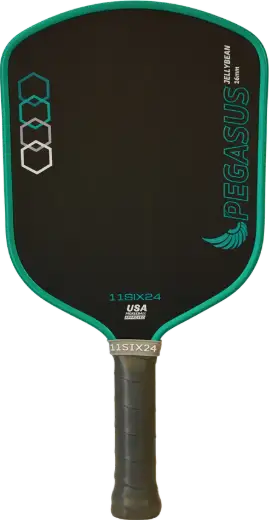
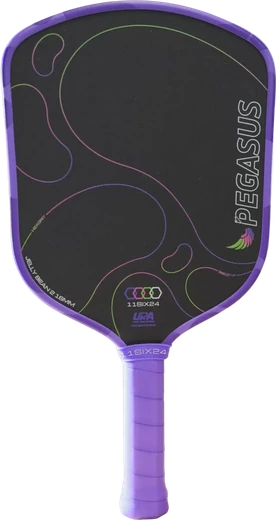
- 211SIX24 Pegasus Jelly Bean 22,37561 RPM behind
- 3RPM Q2 Widebody2,36967 RPM behind
- 21JOOLA Scorpeus Pro IV2,279157 RPM behind
At 2,279 RPM in my serve test, the Scorpeus spins about like the average widebody, so your topspin drives get a normal amount of dip. There's no grit on it, just raw carbon with a slightly rough peel-ply texture. If more spin is what you're after, the three paddles below all have more. As for feel, it's less harsh than the Scorpeus 3S it replaced.
Scorpeus 3S, Pro IV and Pro V
JOOLA brought out the Pro IV line in 2025 to replace the 3S, adding TechFlex Power foam at the throat. The original Scorpeus 3S from 2024 was approved by UPA-A only, and the Pro IV added USA Pickleball approval, which opens up USA Pickleball sanctioned tournaments too. The 3S spun about the same in my serve test, so if you're coming from one, don't expect more spin.
Then in March 2026, JOOLA released the Pro V line, with a Scorpeus Pro V at $300 in both 16mm and 14mm. Its new KineticFrame is a throat that flexes when the ball hits and springs back, and JOOLA added a layer of carbon fiber for durability. I haven't tested it, but it plays softer, with a little more touch on dinks and resets, and it has less pop and doesn't hit any harder. So unless a softer feel matters a lot to you, the Pro IV at half the price is the better buy.
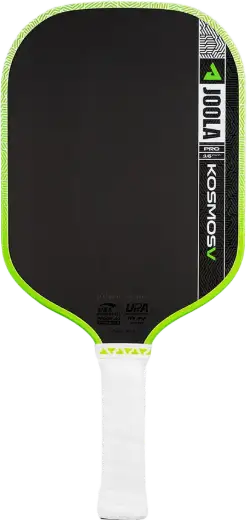
JOOLA's first hybrid, the Kosmos Pro V, came out in that same line at $300. For half the money, the Scorpeus hits a good bit harder, has a good bit more control and a bigger sweet spot, and swings lighter. So the Kosmos really only makes sense if you want a lot more pop.
Scorpeus Pro IV or Perseus Pro IV
Against the Perseus Pro IV 16mm, the Scorpeus is the same price and hits just as hard, so the choice comes down to everything else. Next to the Perseus, the Scorpeus has a lot more control, 80 out of 100 against 35, and that's the gap that settles it. It also has a much bigger sweet spot, spins a lot more and swings lighter.
What the Perseus has is reach. It's half an inch longer, pops a bit more, and its 5.5 inch handle fits a second hand on your backhand, where the Scorpeus's 5.25 inch handle is tight. So I'd only go with the Perseus if you need that reach or that longer handle and your touch is already good enough for a paddle with so little control. Otherwise, the Scorpeus is the better of the two.
What owners are saying
I read the Pickleball Warehouse reviews on November 2, 2026, and all five owners gave it five stars. The reviews praise how controlled the power feels and how accurate it is on soft shots, and one owner found it a little heavier than their old paddle. Pickleball Central had no reviews of it.
The thing I'd watch is core crush, where the honeycomb inside breaks down. It's been reported across the Pro IV line between 2025 and spring 2026, but none of the reports I found name the Scorpeus. The warranty is six months. Registering the paddle with JOOLA's app in the first 14 days stretches that to a full year and gives you up to three replacements instead of two, so I'd do it as soon as it arrives. Shipping it back for a claim is on you.
Paddles I'd look at instead
Two paddles you might pick instead
How it stacks up against the Pegasus Power 2 and the J3CR Crystal Blue
A paddle only wins a score when it leads by 5 points or more.
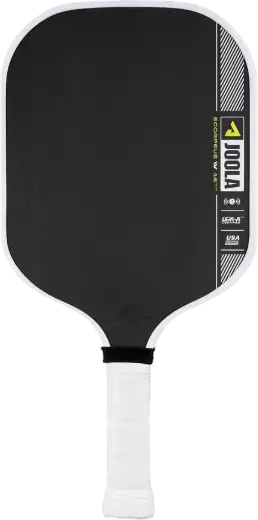 Scorpeus Pro IVWidebody · $149.95
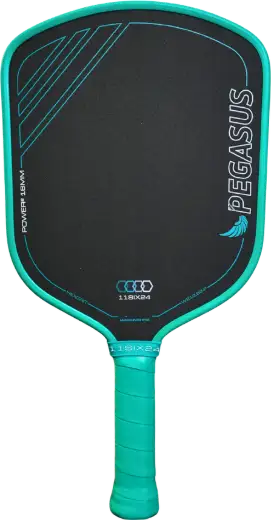 Pegasus Power 2Widebody · $199.99
The Scorpeus Pro IV is more controllable. The Pegasus Power 2 has more pop, spins more and has a bigger sweet spot. Power is about the same. The Pegasus Power 2 costs about $50 more.
Scorpeus Pro IVWidebody · $149.95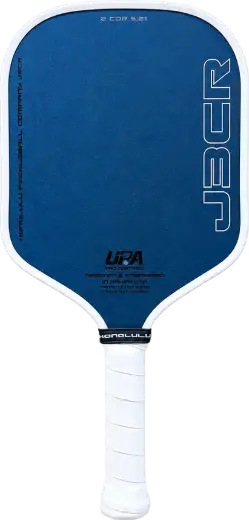 J3CR Crystal BlueWidebody · $175.50
The J3CR has more pop and spins more. Power, sweet spot and control are about the same. The J3CR costs about $25 more.
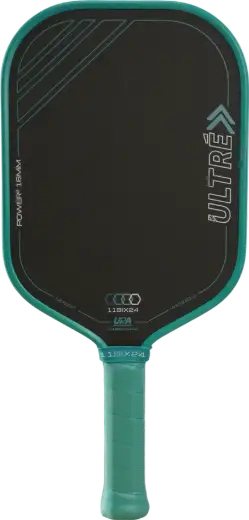
11SIX24 Pegasus Power 2: more spin and the biggest sweet spot, for $50 more
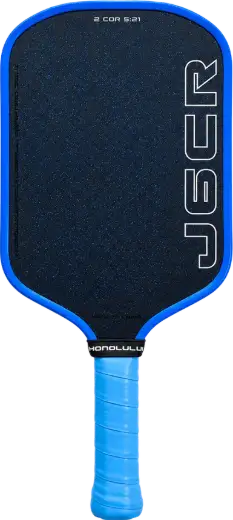
The Pegasus Power 2 is 11SIX24's 2026 widebody power paddle and No. 2 on my widebody list, and the reason to pick it is the biggest sweet spot of any paddle, with a good bit more spin than the Scorpeus. It hits about as hard, too. What you give up is a bit of control, and with a lot more pop, blocks and resets come off the face faster. Its handle is a quarter inch longer and it swings a bit lighter. It's $200 with code STSPICKLEBALL. One thing to know is that UPA-A is its only approval, so it's out for USA Pickleball sanctioned tournaments, though most local leagues and clubs accept UPA-A.
Honolulu J3CR Crystal Blue: the most spin in a widebody
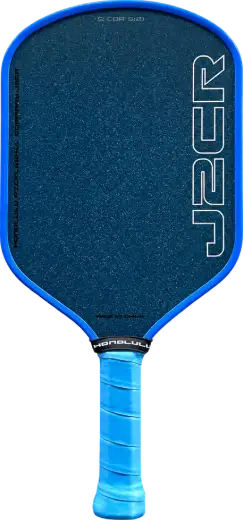
Honolulu's J3CR Crystal Blue is No. 3 on my widebody list, and it's the most spin you can get in this shape, 2,436 RPM on my serve test with its Crystal Blue grit surface. That grit lasts, too. Crystal Blue held on to all but about 1 percent of its spin across 75 games in my wear testing, while the raw carbon faces I tested gave up 14 to 20 percent.
Against the Scorpeus, its power, control and sweet spot are about the same, but it pops a lot more, and its stability on off-center hits is below average for a widebody. The 6 inch handle gives you plenty of room for two hands. Honolulu's own site, where it's $176 with code STS10, was showing it sold out, and Pickleball Central had it in stock for $195. Like the Pegasus, it's UPA-A only, so it's fine for most leagues and clubs but not for USA Pickleball sanctioned tournaments. Honolulu's raw carbon J3CR is the USA Pickleball approved version, but it spins about the same as the Scorpeus, so it won't get you any more spin.
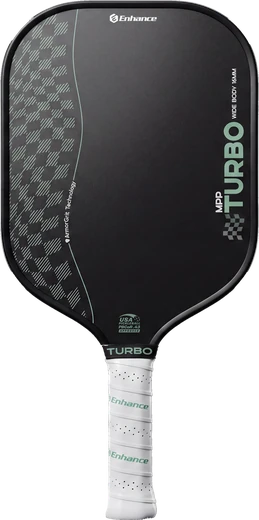
Enhance MPP Turbo ArmorGrit Widebody: more spin and forgiveness for $99.99
Enhance puts its ArmorGrit coating on this widebody's face, and it sits at No. 4 on my widebody list, right behind the J3CR Crystal Blue. It costs $50 less than the Scorpeus and hits about as hard, with more spin, a bit bigger sweet spot and a lighter swing. The trade is a bit less control and a lot more pop. USA Pickleball is its only approval, so PPA and MLP pro events are out. So far, after 20 to 25 games, the grit is holding up well for me, just a little faster to wear than 11SIX24's HexGrit and Honolulu's Crystal Blue. Some early units had a problem with the coating, though, so when yours shows up, run your fingers over the face, and if the grit smooths out quickly, send it back inside Enhance's 14-day return window, which only covers a lightly played paddle. It's $99.99 with code STSPICKLEBALL, and Enhance had it in stock.
My call
At $150, the Scorpeus Pro IV is the one I'd buy over the Perseus, and it's a great deal for anyone who wants to put balls away and keep their blocks and resets low. Just go in knowing you'll bring your own pace on speed-ups. JOOLA's own site was sold out of the 16mm, but Pickleball Central and Pickleball Warehouse both had it for $150.
If spin is what you're missing, I'd spend a little more on the J3CR Crystal Blue, which also pops a lot more, so your resets will need softer hands. To spend less and still play USA Pickleball events, the ArmorGrit widebody gives you more spin and a bigger sweet spot for $50 less, with the same kind of trade on pop. And if you want the biggest sweet spot and more spin, the Pegasus Power 2 is worth the extra $50, as long as you can handle all that pop.
Testing details
- Tested
- July 28, 2026
- Power and pop
- 20 full serves for power and 20 punch volleys for pop, every ball speed read on a Stalker radar gun.
- Spin
- 20 more serves on the radar. I drop the outliers and average the rest, which gave this paddle 2,279 RPM.
- Swing and twist weight
- Measured on a Briffidi SW1 swing weight machine.
- Sweet spot and control
- The same dinks, drops, resets and drives off a Titan ONE ball machine, for every paddle.
- The scores
- Out of 100, with the same tests for every paddle. The top paddles I've tested score 100.
- Published
- Updated
- Scores from
- My database, updated November 10, 2026. How I test
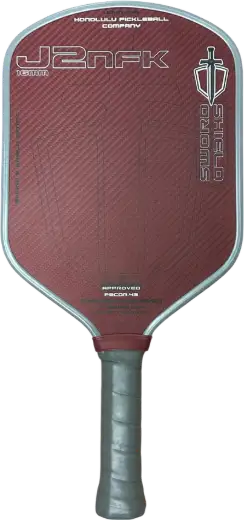
 No. 1
 No. 4
 No. 1
 No. 2
 No. 3
 No. 4