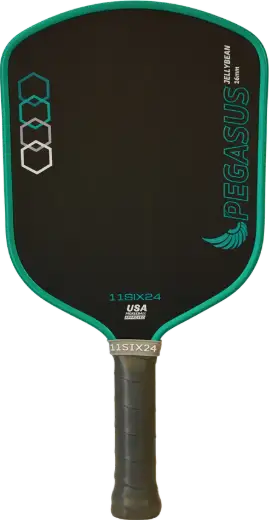
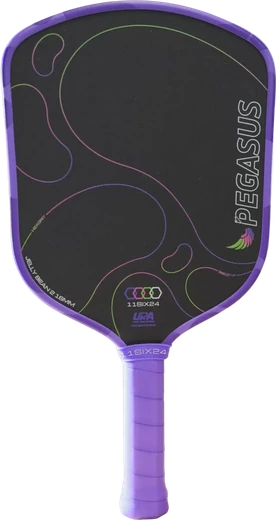
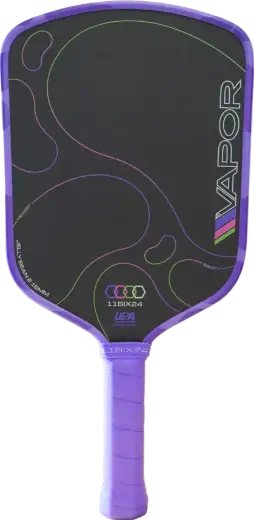
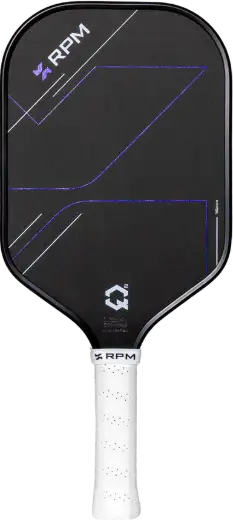
11SIX24 Pegasus Jelly Bean
Widebody · 16mm
- D36Power
- C58Pop
- C64Spin
- S93Sweet spot
- S95Control
$89.99list price $99.99with code STSPICKLEBALL
Start with your level, set a budget around $100 unless you want top spin, and then pick a shape. The best paddles under $100 sit near the top on power, pop, sweet spot and control, so top spin is the one thing that really costs more. Shape is what sets your forgiveness, since the typical widebody scores 83 out of 100 for sweet spot against 52 for the typical elongated.
Every paddle I've tested goes through the same tests, and this guide walks through the decisions that matter in the order I'd make them. Each one is backed by my own test numbers and cuts the field, so by the end you're choosing between a few paddles, not hundreds. If you only have 30 seconds, the first section has the answer and the paddle to buy.

By Steven Shipler · Published I earn a commission when you buy through my links or codes. It never changes a rank. How I test
Find your game, then open the list. Each line names the kind of paddle my numbers point to and my top pick for it.
Prices are with my discount code, checked October 14, 2026. Selkirk's code adds a gift card and doesn't change the price.
Widebody · 16mm
$89.99list price $99.99with code STSPICKLEBALL
No. 1 · Best for intermediate players
Widebody · 16mm
$199.99list price $209.99with code STSPICKLEBALL
No. 1 · Best for advanced players
Elongated · 16mm
$333plus a $40 gift card with code INF-STSPICKLEBALL
Get it at SelkirkThe top pick on my beginner, intermediate and advanced lists.
Widebody · 16mm
$99.99list price $119.99with code STSPICKLEBALL
No. 6 · Best for intermediate players
Widebody · 16mm
$99.99list price $119.99with code STSPICKLEBALL
No. 6 · Best for advanced players
Elongated · 16mm
$99.99list price $119.99with code STSPICKLEBALL
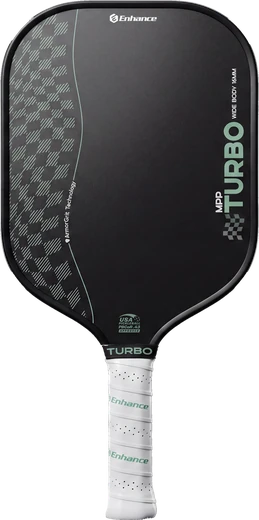
The best pick under $100 on each of the same three lists, each $99.99 with my code. My beginner No. 1, the original Jelly Bean, is already $89.99, so the beginner spot here goes to the next budget pick on that list, the Enhance MPP Turbo ArmorGrit Widebody.
I earn a commission when you buy through my links or codes.
Buy for the level you play at now, not the one you're working toward or the one a pro plays at. At lower levels, points are usually lost on a pop-up or a ball hit long, so the paddle's job is to forgive a miss and keep soft shots low. For a beginner, I want the biggest sweet spot plus the most control, at 16mm or thicker, and no power paddle.
| My list | Power | Pop | Spin | Sweet spot | Control | Main shape |
|---|---|---|---|---|---|---|
| Beginners (10 picks) | 63 | 72 | 74 | 89 | 86 | Widebody, 8 of 10 |
| Intermediate (10 picks) | 87 | 89 | 88 | 83 | 69 | Hybrid, 6 of 10 |
| Advanced (10 picks) | 91 | 88 | 90 | 63 | 43 | Elongated, 8 of 10 |
From my beginner picks to my advanced picks, average power rises from 63 to 91 and spin from 74 to 90, while sweet spot falls from 89 to 63 and control from 86 to 43. You can move up to more power as your game grows, while a power paddle in newer hands mostly shows up as pop-ups and balls that sail long.
Set your budget around $100 unless you're buying for spin, but pick carefully, because the cheap end is uneven. The typical paddle under $100 scores 69 out of 100 for power, a little less than the typical paddle at $150 to $199.99, which scores 77 for power, and it has a little less pop too, 70 against 79.5. Past $200, more money stops buying higher scores, and the typical paddle at $200 and up lands about the same as one at $150 to $199.99 on all five of my tests.
| Price with code | Paddles | Power | Pop | Spin | Sweet spot | Control |
|---|---|---|---|---|---|---|
| Under $100 | 31 | 69 | 70 | 70 | 71 | 70 |
| $100 to $149.99 | 45 | 71 | 68 | 66 | 63 | 68 |
| $150 to $199.99 | 82 | 77 | 79.5 | 73 | 69 | 64.5 |
| $200 and up | 25 | 79 | 79 | 73 | 71 | 64 |
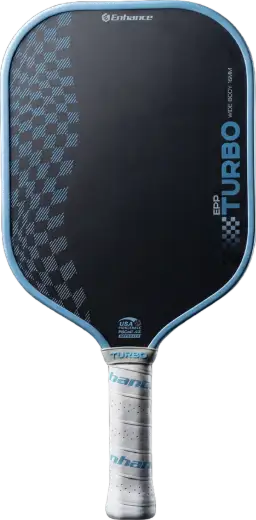
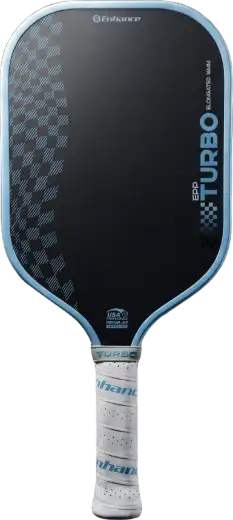
The best paddles under $100 sit near the top on four of my five tests. The $99.99 Enhance EPP Turbo Widebody scored 91 out of 100 for power, and only 13 paddles I've tested hit harder. The $99.99 Vatic Pro V-Sol Pro V7 scored 94 out of 100 for pop, and only seven have more. On the forgiving side, only seven paddles I've tested have a bigger sweet spot than the $99.99 Enhance MPP Turbo ArmorGrit Widebody, and only three have more control than the original 11SIX24 Pegasus Jelly Bean, which is $89.99.
Spin is the exception. All 13 paddles I've tested that spin the ball at 2,374 RPM or more cost at least $159.99 with my code. The most spin I've measured under $100 is 2,354 RPM, on the Enhance MPP Turbo ArmorGrit Hybrid, and 18 paddles I've tested spin more.
A top-price paddle can still win on one test. The $333 Selkirk Boomstik Widebody, my top widebody pick, scored 98 out of 100 for sweet spot, clearly bigger than the 88 of the $99.99 Enhance EPP Turbo Widebody. The EPP Turbo Widebody hits a little harder, though, at 91 for power against 84 for the Boomstik Widebody.
Shape moves sweet spot and control a long way and leaves spin alone. The typical widebody, hybrid and elongated all measured within 5 RPM of each other.
| Shape | Power | Pop | Spin | Sweet spot | Control | Swing weight | Twist weight |
|---|---|---|---|---|---|---|---|
| Widebody (44) | 64.5 | 78.5 | 72 | 83 | 76 | 108.8 | 6.92 |
| Hybrid (60) | 76.5 | 74 | 72 | 71.5 | 71 | 111.9 | 6.57 |
| Elongated (79) | 80 | 74 | 72 | 52 | 45 | 117.6 | 6.21 |
Read it as a trade. A typical elongated scores 80 out of 100 for power against 64.5 for a typical widebody, and it pays for that with sweet spot, 52 against 83, and with control, 45 against 76. The elongated also swings heavier and turns more in your hand on an off-center hit.
If you're new or you play mostly at the kitchen, start with a widebody or a hybrid. Go elongated when you want reach and drive pace and your contact is already consistent. There's more in my guide to paddle shapes and my widebody, hybrid and elongated lists.
Get 16mm unless you already know you want thinner. It's the most common thickness by far. About two thirds of the paddles I've tested are exactly 16mm, and only about one in six are 14mm.
The cleanest test is the same paddle sold in both thicknesses, and 13 models I've tested come in both 14mm and 16mm. The 16mm had more control and a bigger sweet spot in all 13, and more power in 10. The 14mm had more pop in nine, and pop is the extra pace you get on a short punch at the net. So 14mm makes sense for a player who wants more pop and already has the touch to keep it down. The full breakdown is in my 14mm vs 16mm guide.
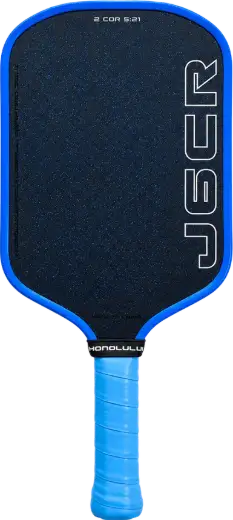
Swing weight is how heavy the paddle feels when you swing it, and lower means faster hands. The ounces on the box don't tell you that, because what you feel depends on where the weight sits, not just how much there is. Across the paddles I've tested, listed weight barely tracks swing weight. The Honolulu J6CR Crystal Blue and the Bread & Butter Loco Elongated are both elongated and both listed at 8.0 to 8.2 oz, yet the J6CR Crystal Blue has a swing weight of 111.27 and the Loco Elongated has a swing weight of 121.2.
Shape is the biggest clue. Among the paddles you can buy today, half the widebodies have a swing weight between about 106 and 110, half the hybrids have a swing weight between about 109 and 114, and half the elongateds have a swing weight between about 115 and 119. For quick hands at the kitchen, look for a swing weight under 110. About a quarter of the paddles I've tested come in under that, and only four of them are elongated.
A heavier swing weight, around 115 and up, feels more solid on drives and blocks. It doesn't bring more power across different paddles, though. Among the paddles you can buy today, the lightest-swinging third has a typical power score of 77 out of 100, and the heaviest third has a typical power score of 73, which is about the same.
A 5.5 inch handle is the standard, and about half the paddles I've tested have one. If you hit a two-handed backhand, look longer. I've tested 46 paddles with a handle of 5.75 inches or more, and 28 of those are elongated.
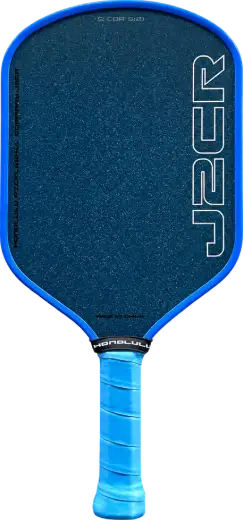
On the same total length, a longer handle means a shorter face, and in the two pairs I've tested, the longer handle didn't make the paddle swing heavier. Honolulu sells the J2CR Crystal Blue with a 5.375 inch handle and the J2CR Long Handle Crystal Blue with a 6 inch one, and both are 16.2 inches long. The J2CR Long Handle has a swing weight of 108.9 against 110.0 for the standard J2CR, and its sweet spot scored 82 out of 100 against 84, which is about the same. The Honolulu J2NF Long Handle has a swing weight of 105.9 against 108.9 for the standard J2NF, with a sweet spot of 76 against 79.
Grip size splits almost evenly. A little more than half the paddles I've tested are 4 1/8 inches around or thinner, and nearly half are 4 1/4 inches or thicker. You can build a thin handle up with an overgrip, but you can't slim a thick one, so if you're unsure, go thinner.
RPM is how fast the ball is spinning after it leaves the face, and paddles land close together on it. Among the paddles you can buy today, half sit between 2,235 and 2,305 RPM, a window of just 70 RPM.
Grit is what moves a paddle out of that pack. The typical grit face measured 2,344 RPM, more than the 2,264 RPM of the typical raw carbon peel ply face, which is the rough carbon texture on most of the paddles I've tested. Of the 13 paddles I've tested at 2,374 RPM or more, 12 have a grit or textured face, led by the Honolulu J2CR Long Handle Crystal Blue at 2,467 RPM. The one raw carbon face up there is the RPM Q2 Elongated, at 2,374 RPM. The two grits I've wear-tested hold up, too. 11SIX24's HexGrit and Honolulu's Crystal Blue both lost only about 1% of their spin over 75 games.
Spin pays off once you can place the ball, so for a newer player, sweet spot and control come first. If you play tournaments, read the approval section before you buy, because 11 of those 13 are approved by UPA-A only.
Most of the paddles I've tested are thermoformed, which means the face is heat-sealed to the core, so the edges bond into one piece. Gen 2 and Gen 3 paddles have a plastic honeycomb core with foam around the edge, and Gen 3 adds foam inside as well. Gen 4 is a full foam core, solid foam with no honeycomb. Gen 1 is the older cold-pressed build.
Full foam has taken over. All but six of the 2026 paddles are Gen 4, and so are the nine most powerful paddles I've tested.
| Shape and core | Paddles | Power | Pop | Spin | Sweet spot | Control |
|---|---|---|---|---|---|---|
| Widebody, honeycomb | 8 | 50 | 61 | 63.5 | 88 | 87 |
| Widebody, full foam | 19 | 78 | 86 | 76 | 88 | 74 |
| Hybrid, honeycomb | 15 | 63 | 69 | 59 | 74 | 80 |
| Hybrid, full foam | 28 | 80.5 | 81 | 76 | 75 | 72 |
| Elongated, honeycomb | 16 | 68 | 65 | 56.5 | 54 | 57.5 |
| Elongated, full foam | 33 | 87 | 79 | 75 | 58 | 32 |
At the same shape and a 16mm or 16.5mm core, full foam scores 17.5 to 28 points higher for power and gives up 8 to 25.5 points of control, with about the same sweet spot. The full foam paddles spin more too, but every one of them came out in 2025 or 2026, so I can't pin that on the core alone.
Control is where older builds still win. None of the 11 paddles I've tested that score 92 or more for control is full foam, and no full foam paddle I've tested scores higher than 89 for control. Full foam does avoid the honeycomb's known weak spot. With heavy use, a honeycomb core can crush and start hitting hotter than it did new, and full foam has no honeycomb to crush.
Full foam isn't one kind of paddle, though. The Gen 4 paddles I've tested run from 33 to 100 for power and from 3 to 89 for control, so pick by the numbers, not the label. The one thing my numbers don't settle is feel, whether a paddle is firm or soft, crisp or muted. If you're new, don't worry about it yet, and if you know what you like, hit a friend's paddle before you buy.
For rec play, any paddle works. For tournaments, check the stamp. USAP approved means the paddle is allowed in tournaments run by USA Pickleball, and UPA-A approved means it's allowed in tournaments run by the pro tour body, which keeps a different list.
Nearly all the paddles I've tested are USAP approved, and about a quarter of them carry both stamps. Another 22 are approved by UPA-A only, and one has neither. The catch is spin, because 11 of the 13 paddles I've tested at 2,374 RPM or more are approved by UPA-A only. Under USA Pickleball rules, the most spin I've measured is the Engage Axiom Elongated at 2,394 RPM, and only seven paddles I've tested spin more. The Axiom Elongated carries both stamps.
PPA Tour amateur divisions accept either stamp under the UPA-A rulebook of April 2026, except the junior divisions, which have required a UPA-A paddle since August 30, 2026. Local events set their own rules, so check yours before you buy a UPA-A only paddle to compete with. If you're a beginner playing rec, the stamp doesn't matter.
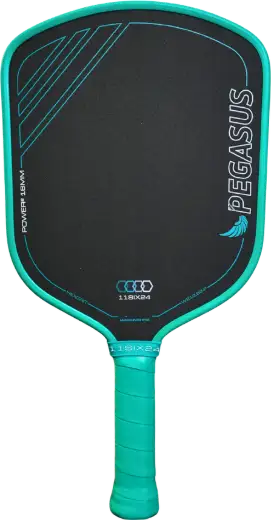
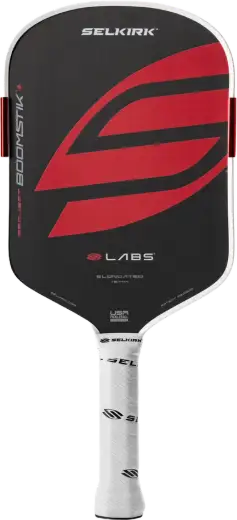
Buy for the level you play at now. If you're new, get a 16mm widebody with a big sweet spot and lots of control, like the original 11SIX24 Pegasus Jelly Bean at $89.99 with my code. For intermediate players, my No. 1 is the 11SIX24 Pegasus Power 2 at $199.99, and for advanced players, it's the Selkirk Boomstik Elongated at $333.
About $100, unless you want top spin. The best paddles under $100 sit near the top on power, pop, sweet spot and control. The $99.99 Enhance EPP Turbo Widebody scored 91 out of 100 for power, and only 13 paddles I've tested hit harder. Top spin costs more, since all 13 paddles I've tested at 2,374 RPM or more cost at least $159.99 with my code. Past $200, the typical paddle scores about the same as one at $150 to $199.99.
Look for a big sweet spot and lots of control first, in a 16mm widebody, and skip power paddles for now. My 10 beginner picks average 89 out of 100 for sweet spot and 86 for control, and all 10 are 16mm or thicker. My No. 1 is the original 11SIX24 Pegasus Jelly Bean, at $89.99 with my code.
Get 16mm unless you already have the touch and want more pop. I've tested 13 models that come in both 14mm and 16mm. The 16mm had more control and a bigger sweet spot in all 13, and more power in 10, while the 14mm had more pop in nine. All 10 of my beginner picks are 16mm or thicker.
Swing weight matters much more than the ounces on the box. Swing weight is how heavy the paddle feels when you swing it, and it depends on where the weight sits. The Honolulu J6CR Crystal Blue and the Bread & Butter Loco Elongated are both listed at 8.0 to 8.2 oz, yet the J6CR Crystal Blue has a swing weight of 111.27 and the Loco Elongated has a swing weight of 121.2. For quick hands at the net, look for a swing weight under 110.
For power, yes. Gen 4 means a full foam core, and at the same shape and a 16mm or 16.5mm core, the full foam paddles I've tested score 17.5 to 28 points higher for power than honeycomb ones, with about the same sweet spot. For the most control, look at older builds, because not one of the 11 paddles I've tested with control of 92 or more is full foam.
Only for tournaments run under USA Pickleball rules. For rec play, any paddle works. Nearly all the paddles I've tested are USAP approved, but 11 of the 13 paddles I've tested at 2,374 RPM or more are approved by UPA-A only. Under USA Pickleball rules, the most spin I've measured is the Engage Axiom Elongated at 2,394 RPM.
Every list holds only paddles I'd pick today, with the price after my code.
Each one answered from my own tests.
Guide
The elongated hits harder, the widebody forgives more, and the hybrid sits in between. Ten models I've tested come as both an elongated and a widebody, and the elongated had more power in eight of them, typically by 7.5 points of power. The widebody had the bigger sweet spot and more control in all 10, typically by 28 points of sweet spot and 29 of control.
Guide
For most players, 16mm. I've tested 13 models that come in both 14mm and 16mm, and the 16mm had more control and a bigger sweet spot in all 13, and more power in 10. The 14mm had more pop in nine, so it's the better pick only if you already have good touch and win most of your points in fast hands battles at the net.
 No. 2
 No. 3
 No. 2
 No. 3
 No. 4
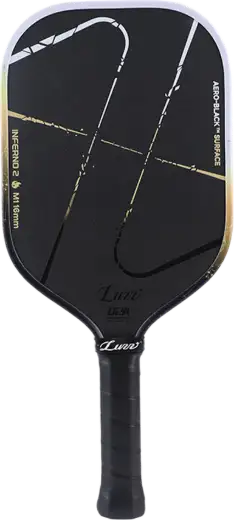 No. 2
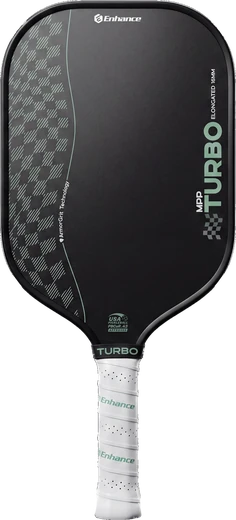 No. 1
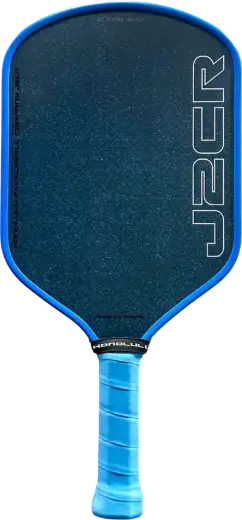 No. 1
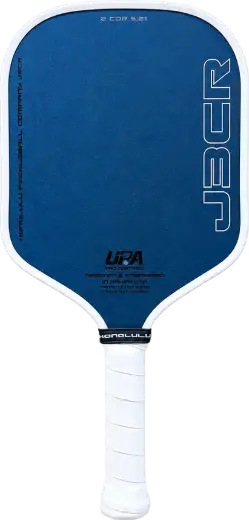 No. 2
 No. 4
 No. 3
 No. 4
 No. 1
 No. 3