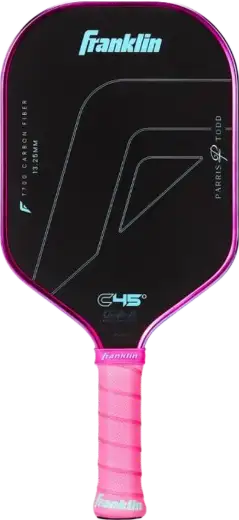
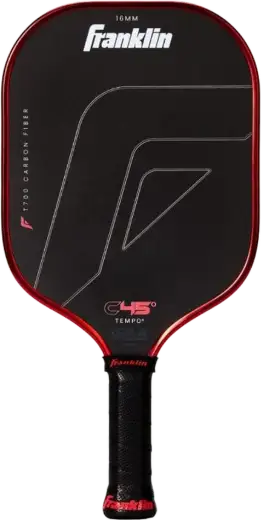
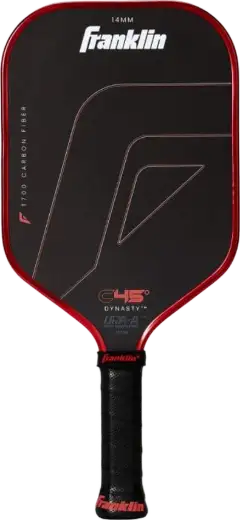
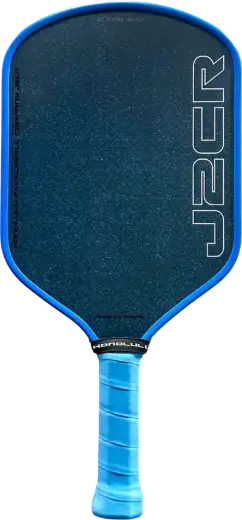
The C45 Dynasty is Franklin's elongated C45, in 14mm and 16mm, and the nice thing about it is you can play it pretty much anywhere. If you're a Franklin fan who wants one paddle for every event, I'd get the 16mm, but for most people it's a hard buy, because cheaper elongateds beat it on all my scores. Of the two, the 16mm is a lot more forgiving, and both have a crisp, solid feel at contact. Each thickness has USA Pickleball approval and UPA-A approval, which is the one pro events like the PPA and MLP use. The 14mm hits harder, but its power is still only about average for an elongated, and when you catch the ball off center, its face twists more than on almost any other paddle. If you can skip USA Pickleball sanctioned tournaments, I'd look at Honolulu's J6CR Crystal Blue first. It's the J6CR with Honolulu's Crystal Blue grit on the face, and right now it's my main paddle.
The C45 line started out as a single hybrid, and Franklin added the Dynasty in June 2025, along with the Tempo widebody. Franklin says the Dynasty is thermoformed, which means it's heat-molded into one piece. Inside, there's what Franklin calls a PowerFlex core with an inner foam layer, under a raw carbon face. Both thicknesses have a 5.6 inch handle that leaves room for a two-handed backhand, and it's $230, or $207 with code STSPICKLEBALL.
Every version, side by side
| Out of 100 | C45 Dynasty 14mm$206.99 with code · elongated | C45 Dynasty 16mm$206.99 with code · elongated |
|---|---|---|
| 81ALeads by 15 | 66B | |
| 74B | 74B | |
| 34FLeads by 11 | 23F | |
| 32F | 56CLeads by 24 | |
| 28F | 43DLeads by 15 | |
| lower is quicker | 117.0 | 115.9 |
| higher is steadier | 5.34 | 5.92 |
Dynasty 14mm
$206.99with code STSPICKLEBALL
list price $229.99Code STSPICKLEBALL takes 10% off. Enter it at checkout.
Dynasty 16mm
$206.99with code STSPICKLEBALL
list price $229.99Code STSPICKLEBALL takes 10% off. Enter it at checkout.
Pros and cons
Pros
- It's approved by both USA Pickleball and UPA-A, so you can take it to pretty much any event you'd enter.
- The 14mm hits harder than any other C45, with power right around the average elongated's.
- The 16mm is the forgiving thickness, and its sweet spot and control are pretty average for an elongated.
- It feels crisp at contact, though a bit less stiff and hollow than most foam-edged thermoformed paddles, and the 16mm feels a touch softer than the 14mm.
Cons
- On the 14mm, mishits twist the face a lot, so blocks and resets off the edge come off line, which hurts most if a lot of your points are fast exchanges at the kitchen.
- Neither thickness spins much for an elongated, so if you win points with topspin drives and rolls, it gives you less to work with.
- You're paying a lot for an elongated that wants tape before it plays its best, the 14mm most of all, so it's a poor fit if you'd rather play it straight out of the box.
Quick answers
Should I get the 14mm or the 16mm?
The 16mm for most players. Its sweet spot is a lot bigger and it has a good bit more control, with the same pop, which is the pace you get on short swings like blocks and punch volleys. The 14mm hits a good bit harder, but mishits twist its face more, so it's for a player who wants power and doesn't mind putting tape on it.
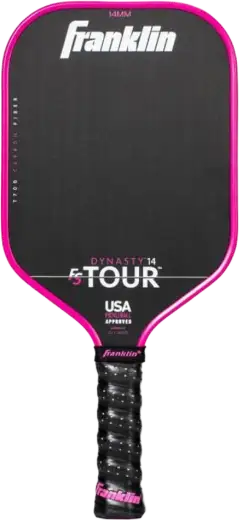
Is the C45 Dynasty the new FS Tour Dynasty?
It's Franklin's newer Dynasty, but the two play almost nothing alike. The FS Tour Dynasty 14mm I tested is a control paddle, and the C45 Dynasty hits a lot harder, with a lot less control. There's a full section on it below.
Where should I add weight on the C45 Dynasty?
I'd put it low on the sides. A few inches of tungsten tape on each side, from near the throat up to about 4 and 8 o'clock, steadies the face without making it feel head-heavy.
What's the warranty?
Franklin gives the C45 line a one year limited warranty that covers structural problems like delamination, cracking and edge guard separation. Normal wear isn't covered, and Franklin's warranty page also says a slight rattle from loose glue bits isn't covered, since it doesn't change how the paddle plays.
How I tested
Every rank and average on this page comes from the 186 paddles I've tested that you can still buy, and 81 of them are elongateds. Both thicknesses went through my usual tests. Power and pop come from ball speed on my Stalker Pro 3S radar, and I read spin in RPM off that same radar when I serve. Swing weight and twist weight come off my Briffidi SW1. Sweet spot and control are scores I rate rather than measure, from ball machine drills where every paddle hits the same dinks, drops and resets.
The 14mm is the harder hitter
Franklin's other C45s include the original hybrid, the Tempo widebody and a thinner hybrid called the Parris Todd C45. If you're coming from any of them, the Dynasty 14mm is going to feel like a different paddle, because it hits a lot harder. Next to other elongateds, though, its power and pop are both right about average. So you get honest pace on drives and punch volleys, but it isn't going to out-hit the elongateds built for power.
The thicker 16mm gives up a good bit of that power and keeps the same pop, and what you get back is a much better paddle for the soft game, which I'll get to below. Swing weight is about average for an elongated on both thicknesses, so neither one feels heavy or extra quick in your hands. They just swing like elongateds.
How it feels in your hand next to other elongateds you can buy
About average in your hands, a little less steady when you miss the middle
How heavy the paddle feels when you swing it. Lower means faster hands.
About average swing weight for an elongated paddle.
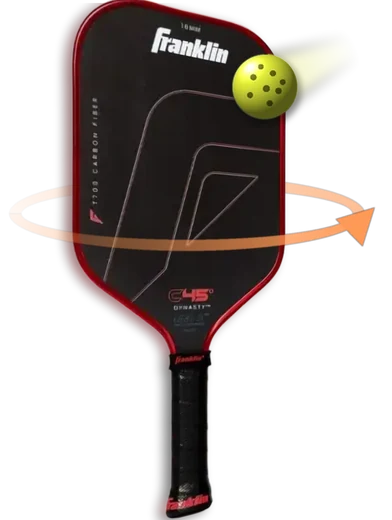
How well the paddle resists turning in your hand when you hit off center. Higher means steadier.
Less steady than most elongated paddles.
How its sweet spot stacks up against other elongateds you can buy
An average-size sweet spot for an elongated paddle
Both rings are sized to their score.
Mishits are the 14mm's big problem
When you catch a block or a reset out toward the edge on the 14mm, the face twists and the ball comes off short or wide. That's twist weight, how well a paddle holds steady on off-center hits, and the 14mm's is the lowest I've measured on a paddle you can still buy. Going up to the 16mm helps, but it's still in the bottom fifth of the elongateds.
That's why I'd treat the Dynasty as a paddle to tune. Tungsten tape low on the sides steadies the face, and because the weight sits low, the swing only gets a bit heavier and the paddle doesn't turn head-heavy. If you've never weighted a paddle and don't want to start, that's a real cost, and you're better off with an elongated that's steadier out of the box, like the ones further down.
The soft game is easier on the 16mm
This is where the two thicknesses split the most. Only three elongateds have a smaller sweet spot than the 14mm, and its control is a good bit lower than the average elongated's. Since the face twists so easily, too, a dink you catch a little off center won't go where you meant it.
The thicker one is a different story. You get about the sweet spot and control of the average elongated, so drops and resets are a lot more forgiving than on the 14mm, and it feels softer off the face on dinks than the thinner one does. That doesn't make it a control paddle, but it's a solid, middle of the road elongated for the soft game. If you split your time between hitting and resetting, that's the Dynasty I'd pick, because the 14mm makes you pay for any touch shot you don't hit clean.
It doesn't spin much for an elongated
How its spin stacks up against other elongateds you can buy
Less spin than most elongated paddles, 137 RPM below the average
The top three for spin
- 1Honolulu J6CR Crystal Blue2,424
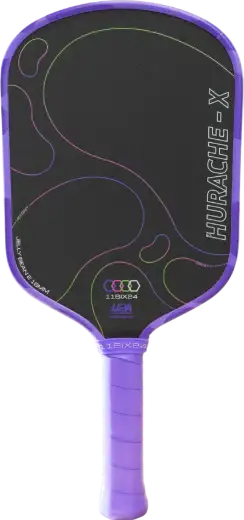
- 211SIX24 Hurache-X Jelly Bean 22,39529 RPM behind
- 3Engage Axiom Elongated2,39430 RPM behind
- 76Franklin C45 Dynasty2,141283 RPM behind
Franklin gives the Dynasty a raw carbon face with a peel ply texture, which is the fine weave you get when a fabric layer gets peeled off after molding. Only ten elongateds spin less than the 14mm, and only four spin less than the 16mm. So your topspin drives and rolls won't dip the way they do off a grittier elongated, and you'll be winning with placement more than shape.
Raw carbon also loses spin as you play. In my wear tests, raw carbon faces lost 14 to 20% of their spin, so whatever spin the Dynasty has on day one is about the most it's going to have.
C45 Dynasty vs FS Tour Dynasty
The FS Tour Dynasty is the elongated Franklin sold before this one, from December 2023, and it's still around for about $150. I tested the 14mm. If you liked that paddle, the C45 Dynasty is pretty much the opposite. Only one elongated has more control than the FS Tour Dynasty 14mm. Against the C45 Dynasty 14mm, it's also much steadier on mishits, with more spin and a lot bigger sweet spot. What it doesn't have is pop. Its pop is the lowest of all 186 paddles, and it doesn't hit hard either.
The C45 Dynasty 14mm swings a bit lighter and has a lot more power and pop. So the old one suits a player who wants to sit back, block and reset, and the new one is for a player who wants more pace than the old one gave. If control is why you liked the FS Tour Dynasty, the C45 Dynasty isn't its replacement, and the FS Tour Dynasty is still the better fit for you.
What owners are saying
There aren't many owner reviews yet, but every one I found was happy. When I went through the stores on November 7, 2026, I found ten across both thicknesses, nine at Golf Galaxy and one at Tennis Warehouse, and all ten were five stars. Three of the Golf Galaxy owners said it gives them power and control together. A 16mm owner said it "still provides a lot of power without giving up any control," and a 14mm owner said almost the same thing. One owner who'd played Franklin's older FS Tour called the new one "superior over the tour model."
My numbers don't back power and control together on either thickness. The 14mm has about average power for an elongated but a good bit less control, and the 16mm is the other way around. None of them reported a rattle, a crushed core or delamination, but that's too few reviews to tell you much about how it holds up over months of play.
The J6CR Crystal Blue beats it on paper
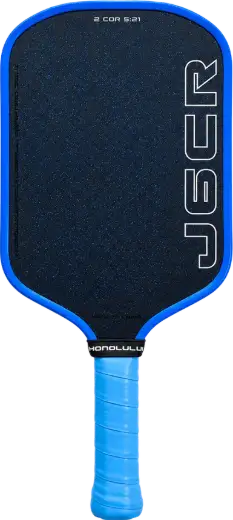
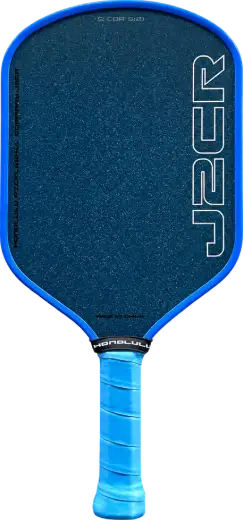
The J6CR Crystal Blue is Honolulu's 16mm elongated with its Crystal Blue grit. Coming from the 14mm, dinks and resets get much easier, because the sweet spot and control are both a lot better. Against the 16mm, it hits a lot harder and has a lot more control, plus a bigger sweet spot. Its pop is a good bit higher too, so drops want soft hands. It's steadier on mishits than either Dynasty thickness, though its twist weight is still a little under the average elongated's. It's also one of the lightest swinging elongateds, so it feels quick in your hands. No other elongated spins more, and the spin lasts. After 75 games in my wear test, Crystal Blue grit had lost only about 1% of its spin. One thing to know if you love the Dynasty's crisp feel is that Honolulu paddles feel a little softer at contact.
What you give up is USA Pickleball approval. The J6CR Crystal Blue is approved by UPA-A only, so you can't use it in USA Pickleball sanctioned tournaments. UPA-A is the approval PPA and MLP pro events use, and most local leagues and clubs accept it. It's $176 with code STS10, which is $31 less than the Dynasty with its code. When I checked on November 7, 2026, Honolulu's current batch was sold out, with the next one listed to ship November 13.
If you need USA Pickleball approval, Honolulu's raw J6CR has it, and it's the same paddle with raw carbon in place of the grit. Against either Dynasty thickness, the soft game gets easier and the face holds steadier on mishits, and it spins more and swings lighter too. Next to the Crystal Blue, it hits a bit harder and spins less, and like the Dynasty's, its raw carbon face loses spin as you play. It was in stock on November 7 at $176 with code STS10.
Other paddles to look at
Two paddles you might pick instead
How it stacks up against the TruFoam Waves 3 and the MPP Turbo ArmorGrit Elongated
A paddle only wins a score when it leads by 5 points or more.
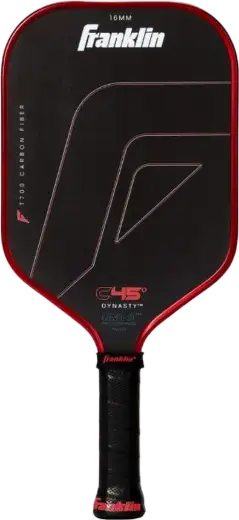 C45 DynastyElongated · $206.99
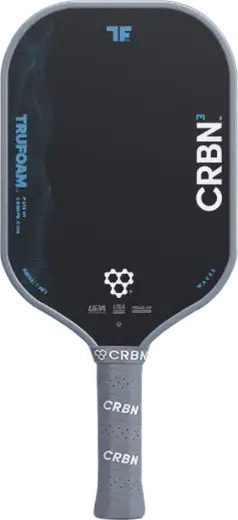 TruFoam Waves 3Elongated · $179.99
The TruFoam Waves 3 hits harder, has more pop, spins more and is more controllable. Sweet spot is about the same. The TruFoam Waves 3 costs about $27 less.
C45 DynastyElongated · $206.99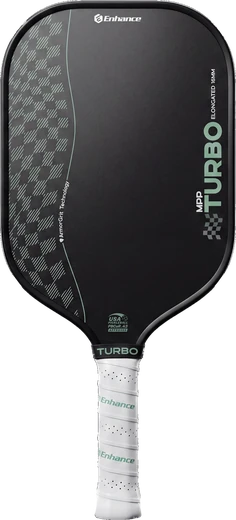 MPP Turbo ArmorGrit ElongatedElongated · $99.99
The MPP Turbo ArmorGrit hits harder, has more pop, spins more, has a bigger sweet spot and is more controllable. The MPP Turbo ArmorGrit costs about $107 less.
CRBN TruFoam Waves 3: a forgiving swap for the 14mm
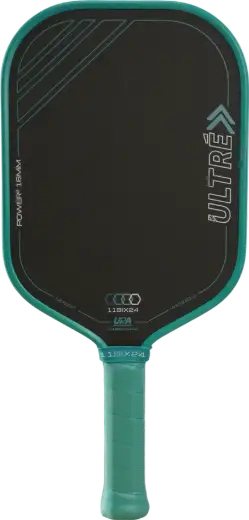
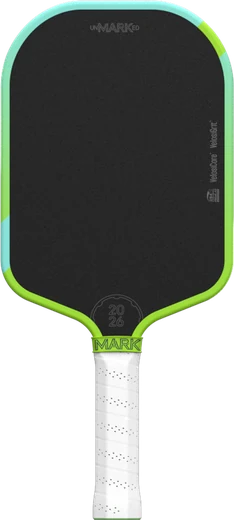
The TruFoam Waves 3 is CRBN's 14mm elongated, and like the Dynasty, it's USA Pickleball and UPA-A approved. If you were looking at the Dynasty 14mm, this is the closest swap. Power, swing weight and spin are all about the same, but you get a lot more sweet spot and control, and it's steadier on mishits than most elongateds. It also has a good bit more pop, so your dinks need a softer touch, but there's a lot more room for error on them. On November 7, 2026, CRBN had it on sale, and it came to $180 with code STSPICKLEBALL.
Enhance MPP Turbo ArmorGrit Elongated: beats it for half the price
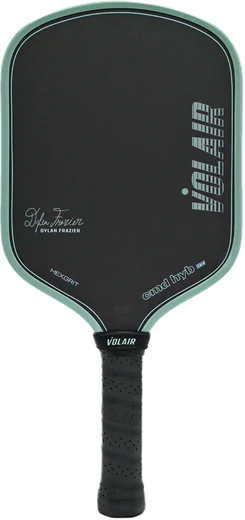
The MPP Turbo ArmorGrit Elongated is Enhance's 16mm elongated, with a grit coating called ArmorGrit over the carbon. It's USA Pickleball approved but not UPA-A, so it's for the player who doesn't play PPA or MLP events and doesn't want to spend over $200 on a paddle. For that player, it's an easy switch, because it hits harder than either Dynasty thickness, spins more and is steadier on mishits. Its MPP foam core has a softer, more plush feel than the Dynasty's, though. Enhance says ArmorGrit is built to hold its spin longer than raw carbon. So far in my wear test, it's wearing a little faster than Crystal Blue grit. It's $99.99 with code STSPICKLEBALL.
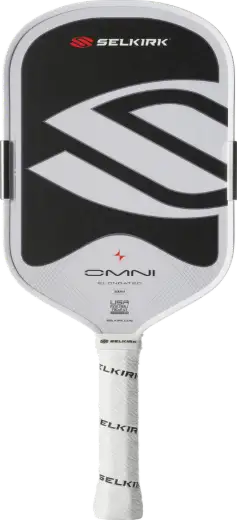
Selkirk OMNI Elongated: the steady fix, for more money
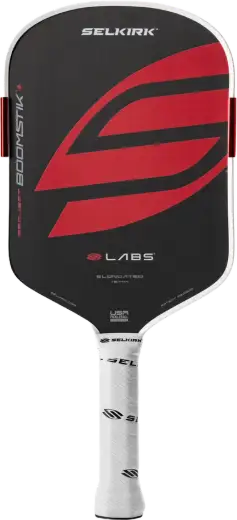
The OMNI Elongated is Selkirk's 16mm elongated, and it has the highest twist weight of any elongated I've tested, so it's the opposite of the Dynasty on mishits. Compared with the Dynasty 14mm, it hits about as hard with a bit more pop, while its spin, sweet spot and control are all a lot higher. What it costs you is a swing that's a bit heavier and more money, and its InfiniGrit surface has lost spin faster than Crystal Blue in my wear test. It's approved by USA Pickleball and UPA-A, and Selkirk backs it with a limited lifetime warranty. It's $300. Code INF-STSPICKLEBALL adds a $40 Selkirk gift card, the most Selkirk gives on an order this size. The price stays the same.
My call
The C45 Dynasty has a crisp feel and it's legal just about everywhere you'd play, but cheaper elongateds beat it at everything I score, so it's hard to justify for the price. You'll get more power from the 14mm, but it twists a lot on mishits, so I'd only get it if you like tuning a paddle and plan to put weight low on the sides. The 16mm is the safer pick for the soft game, and it's the one I'd get if you want a Franklin.
For most people, though, I'd skip it. If UPA-A works for you, the J6CR Crystal Blue is the one I'd get, and it costs less. If you need both approvals, the TruFoam Waves 3 is the closest swap, because it hits as hard as the 14mm and is a lot more forgiving, for less money. If USA Pickleball approval is all you need, the MPP Turbo ArmorGrit Elongated beats the Dynasty for about half the price. The OMNI Elongated is the steadiest elongated I've tested, and it's worth paying more for if mishits are what bug you most. And if you came here missing the old FS Tour Dynasty's control, that's still the paddle for you.
Testing details
- Tested, Dynasty 14mm
- August 4, 2026
- Tested, Dynasty 16mm
- August 4, 2026
- Power and pop
- 20 full serves for power and 20 punch volleys for pop, every ball speed read on a Stalker radar gun.
- Spin
- 20 more serves on the radar. I drop the outliers and average the rest.
- Swing and twist weight
- Measured on a Briffidi SW1 swing weight machine.
- Sweet spot and control
- The same dinks, drops, resets and drives off a Titan ONE ball machine, for every paddle.
- The scores
- Out of 100, with the same tests for every paddle. The top paddles I've tested score 100.
- Published
- Scores from
- My database, updated November 8, 2026. How I test
 No. 1
 No. 2
 No. 3
 No. 4
 No. 4