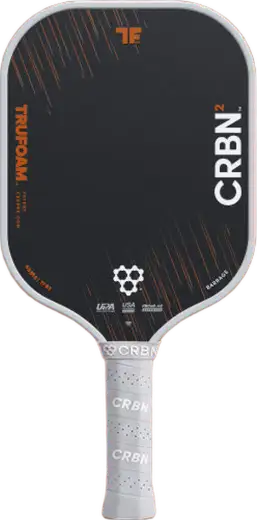
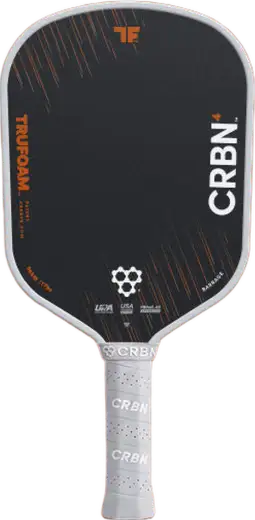
The CRBN TruFoam Genesis 4 is a 14mm full foam hybrid, and the first thing you notice is how quick it is in your hands. Only five hybrids I've tested swing lighter, and you feel that the second things speed up at the kitchen. And since the core is foam all the way through instead of a polymer honeycomb, it feels softer, with the ball staying on the face a little longer. So if you win a lot of your points with fast hands at the net and you like a softer feel, it's a good fit. It's approved by both USA Pickleball and UPA-A, the approval PPA and MLP pro events use, so you can take it to pretty much any tournament. But CRBN's Barrage 4, a newer hybrid in the exact same shape, swings just as light, hits a lot harder and costs the same, so for most people, that's the one I'd buy.
The catch with the Genesis 4 is power and control. It doesn't hit very hard for a hybrid, so don't count on your drives to finish points, and control is one of its weaker spots too, so your resets can sit up on you. It also isn't very stable on off-center hits. And when I checked on November 7, 2026, CRBN's own store had it sold out, so you may have to shop around to find one.
Pros and cons
Pros
- It's really quick in your hands, which is what you want when a hands battle breaks out at the kitchen.
- Pop is a bit above the average hybrid, which helps on punch volleys and counters.
- If you want it steadier, it has room for some tungsten tape on the sides.
Cons
- It's short on power for a hybrid, which matters most if you like to finish points with big drives.
- Its control trails most hybrids, so if you win points with drops and resets, more of them will float on you.
- For the same money, CRBN's Barrage 4 is the better paddle for most buyers.
Quick answers
Is the CRBN Genesis 4 worth it in 2026?
For most people, no. It launched at $280 in July 2025 and sells for $230 now, which helps, but a dozen hybrids you can buy today match or beat it on all five of my scores, and most of them cost less. If you love the Genesis feel, it's still a good paddle. You can just get more for your money.
Is the Genesis 4 approved for tournaments?
Yes. It's on both USA Pickleball's and UPA-A's approved lists, so you can use it in USA Pickleball sanctioned tournaments and in pro events like the PPA and MLP. That's a real plus, because most of the dozen hybrids that match or top it across the board only have one of the two.
Is the Genesis 4 discontinued?
Not that CRBN has said, but it may be getting harder to find. CRBN's site showed no stock when I checked, and JustPaddles listed it under its closeouts. Pickleball Central still had it for $230. CRBN's 30-day trial only covers paddles bought on its own site, so it helps that Pickleball Central gives you a 30-day test drive of its own.
How I tested
Everything I score here runs through the same setup. A Stalker Pro 3S radar clocks the ball off the face for power and pop, and on serves it reads spin in RPM. Swing weight and twist weight go on my Briffidi SW1. Swing weight is the effort it takes to whip the paddle around, and twist weight is how stable it stays when you hit the ball off the center. Sweet spot and control come from my ball machine dink, drop and reset drills. I haven't tracked how this face holds up over months of play, so there's no wear number for it here. Every price and stock check on this page is from November 7, 2026.
I also got to play the Genesis 4 before it came out in July 2025, and I really enjoyed the shape and how it played. Once it was out, I liked the nice solid length on the 5.5 inch handle and the little flare on the sides of the face.
It's built for fast hands
The whole reason the Genesis 4 exists is swing weight. CRBN's first three Genesis shapes came out in January 2025, and the Genesis 1 and Genesis 3 both swing heavier than most elongated paddles I've tested. Six months later CRBN added the 4 in a hybrid shape, and it swings a lot lighter than both of them. That August I said CRBN balanced the swing weight really well on this one, after the 1 and 3 came out a little high.
On the court, that means when someone rips one right at you at the kitchen, you're not late on it, and quick counters are where this paddle feels its best.
The flip side is stability. Its twist weight is in the bottom quarter of hybrids, so it's less stable on blocks you catch off the center. The usual fix is a little weight tape along the sides. A few grams a side brings it up to about an average hybrid's swing weight, so you're trading that quickness edge for more stability.
How it feels in your hand next to other hybrids you can buy
Quick in your hands, a little less steady when you miss the middle
How heavy the paddle feels when you swing it. Lower means faster hands.
Only five hybrids you can buy swing lighter.
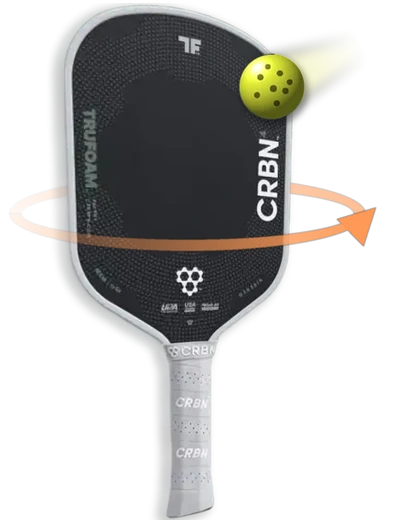
How well the paddle resists turning in your hand when you hit off center. Higher means steadier.
Less steady than most hybrids.
How its sweet spot stacks up against other hybrids you can buy
An average-size sweet spot for a hybrid
Both rings are sized to their score.
Good pop, not much power
When you're trading fast shots at the net, the ball comes off the Genesis 4 with some pace even on a short swing. That's pop, and it's this paddle's best score.
Power, the pace on full drives and serves, is a different story. Most hybrids hit harder, so if you like to end points with a big drive from the back of the court, this isn't the paddle for it. Drives feel solid, but the ball just doesn't come off with enough pace to push people back.
Control is where the fiberglass layer shows up
The sweet spot scored 71 out of 100 for me, right at the hybrid average of 72, so it's nothing special either way. Control is where the Genesis 4 falls behind. It scored 57 in my reset drills, a good bit under the hybrid average of 71. CRBN put a layer of fiberglass under the raw carbon face, and that's where the feel gets tricky. Most of the time you won't notice it, but every so often a ball you catch right in the middle jumps off with more pace than you planned for. On a drive, that's a nice surprise. On a drop or a reset, it's how a ball you meant to keep low ends up high.
So if your game is built on soft resets in the transition zone, you'll have to work harder with this one.
Spin comes from dwell, not grit
How its spin stacks up against other hybrids you can buy
About average spin for a hybrid, right at the average
The top three for spin
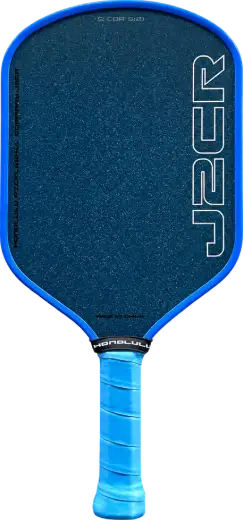
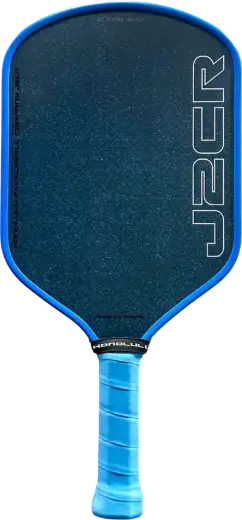
- 1Honolulu J2CR Long Handle Crystal Blue2,467
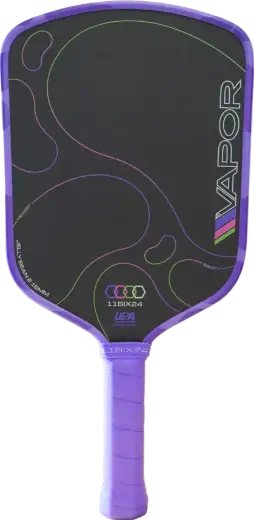
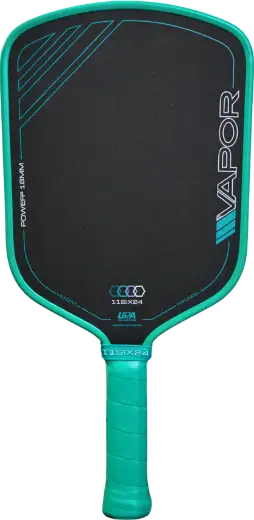
- 211SIX24 Vapor Jelly Bean 22,40364 RPM behind
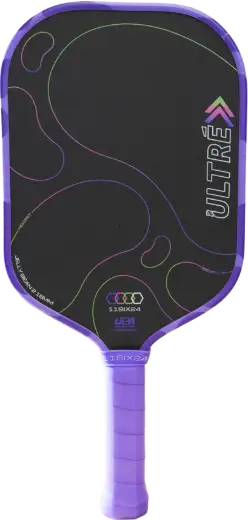
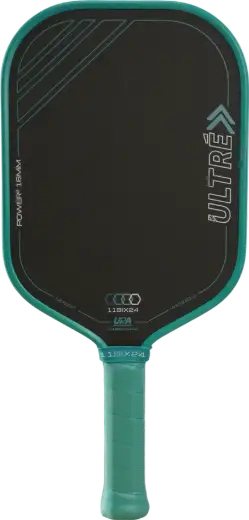
- 311SIX24 Ultré Jelly Bean 22,39770 RPM behind
- 30CRBN TruFoam Genesis 42,278189 RPM behind
Spin is right in the middle for a hybrid. The face is raw carbon with a peel ply finish, which leaves a little cloth texture pressed into the carbon, but on the Genesis 4 it still feels pretty smooth. So most of the spin comes from dwell, the ball sitting on that soft foam core a little longer before it leaves, and this paddle has really good dwell.
That smooth face costs you a little on the small shots, though. My take when it came out was that you get less spin on little flick rolls at the net and on dinks than on your bigger swings, since there isn't much grit on the face to grab the ball. That's worth knowing if you like a lot of spin on your dinks.
Which Genesis, and what about the Waves 4
CRBN makes the Genesis in four shapes. The 1 and 3 are elongated, the 2 is a widebody, and the 4 is the only true hybrid. CRBN first called the 3 a hybrid, but if you want the hybrid shape, the 4 is the one.
- Genesis 1 and 3: both swing a lot heavier than the 4 and have a lot smaller sweet spots. The 3 spins more, but it gives up a lot of pop and control to the 4.
- Genesis 2: the widebody's sweet spot is a bit bigger than the 4's, it has more control, and pop is about the same. The 4 hits a lot harder and is lighter in your hands.
The Waves 4 came out in September 2025 in the same hybrid shape, from CRBN's grittier TruFoam Waves line. On power, pop, spin and control, the two score about the same, but the Waves 4's sweet spot is a good bit smaller, so it's more of a sidegrade than an upgrade. CRBN has it for $200, $30 less than the Genesis 4, and I'd pay the difference for the bigger sweet spot.
What owners are saying
I went through the owner reviews on CRBN's own site in November 2026, almost 250 of them, and found only one more anywhere else, a five-star review on JustPaddles. Most on CRBN's site are five stars, but a run of early reviews repeat word for word under different names, so I put more weight on the ones with specific details.
Owners notice the swing weight right away. One called it super low and extremely noticeable in hand battles, another found it a bit too light out of the box, and two added 3 to 4 grams a side. On the sweet spot, they split, with two calling it a bit tight and one calling it big.
The complaints split a few ways. A couple of the lower reviews wanted more control, and a couple of owners felt it gave up some pace on drives, which both line up with my numbers. Three owners wished for a longer handle or a bigger grip. Most of the rest were about how it holds up. Four owners heard something loose inside the paddle, one of them on their second TruFoam paddle with loose epoxy, but those reports all came between September 2025 and February 2026, with none since. Two more felt it fade after a few months. One said the pop softened, and a one-star review said it lost most of its power and control. Warranty stories were mixed, with one of the rattle owners saying the claim was easy to file and they'd be exchanging it, and the one-star owner saying they got the run around.
The Barrage 4 beats it at the same price
CRBN's Barrage 4 came out in March 2026 in the exact same hybrid shape and size, also 14mm and with the same two approvals. CRBN builds it around what it calls a Floating Core, made for pop-based power. When I checked, it was in stock on CRBN's site for $230, the same price the Genesis 4 sells for.
On my numbers, it's the better paddle. It hits a lot harder, it has a bit more pop and a bit more control, and its sweet spot and spin land about where the Genesis 4's do. It swings just as light, too, so you don't give up any hand speed for that extra pace. It's on my Best of 2026 list, and the Genesis 4 isn't on any of my lists right now.
What the Genesis 4 keeps is its feel. The Barrage 4 has less dwell, so the ball leaves the face sooner. If that longer dwell is what you love about the Genesis, it's a fair reason to stay with it. For everyone else, the Barrage 4 is the upgrade.
Alternatives
Two paddles you might pick instead
How it stacks up against the J2NF and the Zen S+
A paddle only wins a score when it leads by 5 points or more.
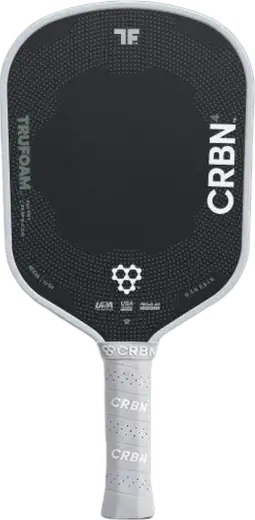 TruFoam Genesis 4Hybrid · $206.99
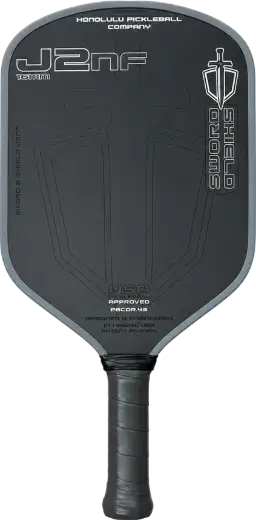 J2NFHybrid · $175.50
The TruFoam Genesis 4 has more pop. The J2NF hits harder, has a bigger sweet spot and is more controllable. Spin is about the same. The J2NF costs about $31 less.
TruFoam Genesis 4Hybrid · $206.99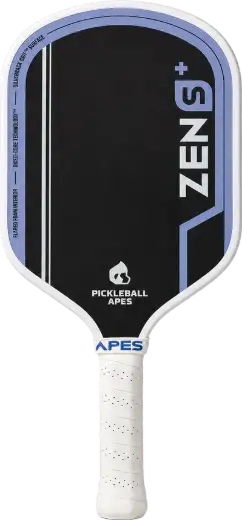 Zen S+Hybrid · $169.99
The Zen S+ hits harder, has more pop, spins more, has a bigger sweet spot and is more controllable. The Zen S+ costs about $37 less.
Honolulu J2NF: bigger sweet spot, more control
The J2NF is one of Honolulu's 16mm full foam hybrids, and it's the paddle I compared the Genesis 4 to when it came out. I wouldn't have bought the Genesis 4 over a Honolulu NF like this one, since the NF has a grittier face and a bigger sweet spot, and my numbers still back up the sweet spot part. It also has a lot more control and hits harder. You give up a bit of pop, and it swings a little heavier. It's approved by USA Pickleball only, so it's out for PPA and MLP events. It's $195 at Honolulu, or $176 with my code STS10. If you hit two-handed backhands, there's a 6 inch handle version for the same price, and it swings about as light as the Genesis 4.
Pickleball Apes Zen S+: higher on every score, for less
The Zen S+ is a 16mm hybrid Pickleball Apes put out in 2026, and no paddle I've tested has more power. It beat the Genesis 4 on every one of my scores while swinging even lighter. The big catch is approval. Only USA Pickleball approves it, so it's out for UPA-A events. Its grit isn't in my wear test yet either, and a few owners on Pickleball Apes' site said it could be better. It's $189 there, or $170 with my code STSPICKLEBALL.
Luzz Glider 2026: the same swing for about half the price
The Luzz Glider 2026 is the closest thing I've found to how the Genesis 4 swings. It's a 16mm hybrid with the same swing weight and twist weight, so it's just as quick and about as stable on off-center hits, and it has both approvals too. It hits harder, with about the same spin, sweet spot and control, and the trade is a good bit less pop. Its core is a polypropylene honeycomb, though, so it feels crisper, without the deep dwell of full foam. If that soft feel is why you like the Genesis 4, this one plays differently. It's $119 at Luzz, or $107 with my code STSPICKLEBALL, about half what the Genesis 4 costs.
My call
I like the Genesis 4. You get one of the quickest hybrids I've tested and some real pop at the kitchen. But for the same $230, I'd buy the Barrage 4 if you want a 14mm CRBN hybrid. If UPA-A doesn't matter to you, the Zen S+ beats both of them for less money. And if your soft game matters most, I'd go with the J2NF for its control. I'd only pick the Genesis 4 if that soft foam feel with the longer dwell is the thing you care about most.
Testing details
- Tested
- September 15, 2026
- Power and pop
- 20 full serves for power and 20 punch volleys for pop, every ball speed read on a Stalker radar gun.
- Spin
- 20 more serves on the radar. I drop the outliers and average the rest, which gave this paddle 2,278 RPM.
- Swing and twist weight
- Measured on a Briffidi SW1 swing weight machine.
- Sweet spot and control
- The same dinks, drops, resets and drives off a Titan ONE ball machine, for every paddle.
- The scores
- Out of 100, with the same tests for every paddle. The top paddles I've tested score 100.
- Published
- Scores from
- My database, updated November 8, 2026. How I test
 No. 1
 No. 2
 No. 3
 No. 4
 No. 2
 No. 3