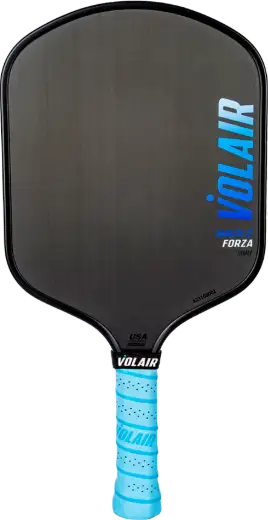
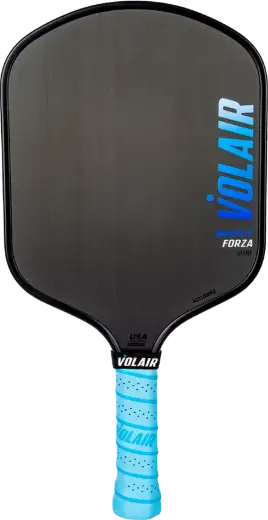
Volair Mach 2 Forza
Widebody · 16mm
- F34Power
- C64Pop
- C63Spin
- S91Sweet spot
- S100Control
$107.99list price $119.99with code STSPICKLEBALL
For most players, 16mm. I've tested 13 models that come in both 14mm and 16mm, and the 16mm had more control and a bigger sweet spot in all 13, and more power in 10. The 14mm had more pop in nine, so it's the better pick only if you already have good touch and win most of your points in fast hands battles at the net.
I've tested 13 paddle models in both 14mm and 16mm, with the same brand, model and shape on both sides and the same tests on each one. Lining up each pair shows what the extra 2mm changes, how often it happens and where it doesn't. Then I'll tell you which one to get, and when the 14mm is the better call.

By Steven Shipler · Published I earn a commission when you buy through my links or codes. It never changes a rank. How I test
Same paddle, 2mm apart
The number is the thickness of the core, the honeycomb or foam layer between the two faces. A 16mm core is about 0.63 inches thick and a 14mm core about 0.55 inches, so the gap is 2mm, about the thickness of a nickel. It's small, but it moves control, sweet spot, power and pop in ways my tests pick up.
To see what thickness does on its own, I took every paddle I've tested in both thicknesses, and that's 13 models. Inside each pair the brand, model, shape, length, width, handle, core material, face and surface are the same, and both paddles went through the same tests. Thickness is the only real difference (a few pairs also differ by an eighth of an inch or less in grip size). Here's what going from 14mm to 16mm did.
| Test | What the 16mm did | Typical change |
|---|---|---|
| Control | Higher in all 13, by 5 or more in 9 | +9 |
| Sweet spot | Higher in all 13, by 5 or more in 7 | +6 |
| Twist weight | Higher in 12 of 13 | +0.25 |
| Power | Higher in 10, by 5 or more in 8, and lower in 1 | +6 |
| Swing weight | Higher in 11 of 13 | +1.0 |
| Pop | Lower in 9, by 5 or more in 4, and higher in 2 | -2 |
| Spin | Higher in 7, lower in 6 | +2 RPM |
Some of the 13 models I've tested in both thicknesses can't be bought anymore, so the tables below only show pairs you can still buy. Every number comes from the same tests, 14mm first and 16mm second.
| Paddle | Power | Pop | Sweet spot | Control |
|---|---|---|---|---|
| Franklin C45 Dynasty | 81 / 66 | 74 / 74 | 32 / 56 | 28 / 43 |
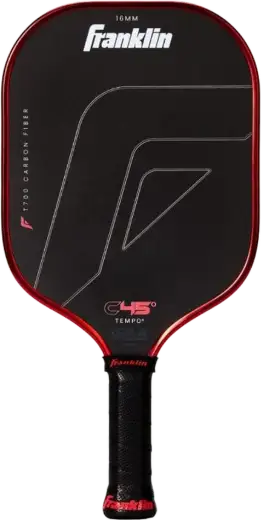
| Franklin C45 Tempo | 43 / 49 | 32 / 30 | 74 / 83 | 72 / 81 |
| JOOLA Perseus 3S | 73 / 74 | 96 / 87 | 50 / 58 | 30 / 35 |
| JOOLA Perseus Pro IV | 68 / 85 | 93 / 64 | 36 / 50 | 31 / 35 |
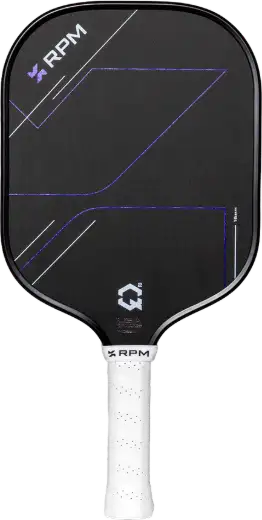
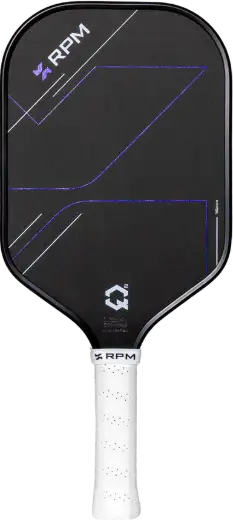
| RPM Q2 Widebody | 64 / 90 | 92 / 98 | 80 / 81 | 62 / 64 |
| Volair Mach 1 Forza | 30 / 36 | 67 / 67 | 59 / 65 | 56 / 69 |
| Volair Mach 2 Forza | 8 / 34 | 68 / 64 | 83 / 91 | 81 / 100 |
| Paddle | Spin (RPM) | Swing weight | Twist weight |
|---|---|---|---|
| Franklin C45 Dynasty | 2,178 / 2,141 | 117.0 / 115.9 | 5.34 / 5.92 |
| Franklin C45 Tempo | 2,177 / 2,210 | 101.8 / 102.5 | 6.18 / 6.57 |
| JOOLA Perseus 3S | 2,154 / 2,217 | 117.7 / 118.7 | 6.16 / 6.41 |
| JOOLA Perseus Pro IV | 2,083 / 2,121 | 115.3 / 116.2 | 6.07 / 6.28 |
| RPM Q2 Widebody | 2,369 / 2,338 | 104.3 / 107.5 | 6.71 / 6.79 |
| Volair Mach 1 Forza | 2,251 / 2,236 | 107.1 / 113.0 | 5.91 / 6.50 |
| Volair Mach 2 Forza | 2,250 / 2,247 | 106.6 / 110.1 | 6.83 / 7.24 |
You can put any pair side by side in my compare tool, like the two JOOLA Perseus Pro IVs.
Yes, and it's the most reliable thing thickness does. The 16mm had more control in all 13 pairs, with control up by 5 points or more in nine and a typical control gain of 9 points. Sweet spot went up in all 13 as well, and in seven of them the sweet spot grew by 5 points or more, with a typical sweet spot gain of 6 points. The biggest jumps came on the Volair Mach 2 Forza, where control went from 81 to 100 out of 100, more than any other paddle I've tested, and on the Franklin C45 Dynasty, where sweet spot went from 32 to 56.
Twist weight, which my swing weight machine measures, points the same way. The 16mm had a higher twist weight in 12 of the 13 pairs, with a typical twist weight gain of 0.25. On a paddle in the middle of the pack, that's enough to put it ahead of 42 more paddles I've tested, so the face turns less in your hand when you miss the center. A 16mm also usually feels a little softer on contact, which makes it easier to take pace off a dink or a reset.
The top of my control scores agrees. The 27 paddles I've tested with the most control are all 16mm or thicker, and the most controllable thinner paddles you can still buy are the 14mm versions of the Volair Mach 2 and Mach 2 Forza, both with a control score of 81.
Not on full swings. The 16mm had more power in 10 of the 13 pairs, with power up by 5 points or more in eight, and it hit softer in just one. The JOOLA Perseus Pro IV went from 68 to 85 out of 100 for power, and the RPM Q2 Widebody went from 64 to 90.
The 14mm's real edge is pop at the net. The 14mm had more pop in nine of the 13 pairs, but it was ahead on pop by 5 points or more in only four of those nine, and the typical pop change across all 13 was just 2 points. The big one is the JOOLA Perseus Pro IV, with pop 93 out of 100 at 14mm against 64 at 16mm. Only two pairs went the other way, and one of them is the RPM Q2 Widebody, where the 16mm had a little more pop, 98 against 92.
So the old rule that 14mm means more power holds for the quick punch at the net, not the drive. A short punch rewards a quick rebound off the face, and a full swing rewards a heavier, steadier paddle, which is what the 16mm usually is. In all 11 pairs where the 16mm swung heavier, it hit at least as hard. In the two where it swung lighter, it didn't gain a point of power, and on the Franklin C45 Dynasty, power dropped from 81 at 14mm to 66 at 16mm.
The lighter swing is the 14mm's other edge, and it's small too. The typical gap was 1.0 in swing weight, and on a paddle in the middle of the pack, that only makes it lighter than 18 more paddles I've tested. You'd feel it most in fast hands battles.
No. The 16mm spun more in seven pairs and less in six, and the typical change was 2 RPM. Some gaps were real, like 63 RPM more on the 16mm JOOLA Perseus 3S and 65 RPM less on another pair, but they don't follow the thickness. Spin comes from the face, so pick a spin paddle by its surface, and start with my spin list.
Going thicker from the thin end works the same way for pop and control, but not for power. I've tested four of PaddleTek's Bantam models at both 12.7mm and 14.3mm. The thicker version lost pop in three of the four, two of them by more than 30 points of pop, and the Bantam TKO-CX went from pop 100 out of 100 at 12.7mm, more than any other paddle you can still buy, to 66 at 14.3mm. Control went up in three of the four, led again by the TKO-CX, which went from a control score of 34 to 65. Power didn't go up in any of them. All four thicker Bantams had a lower power score, though only one dropped by 5 points or more, and sweet spot stayed within 2 points in every pair.
| Paddle | Power | Pop | Sweet spot | Control |
|---|---|---|---|---|
| PaddleTek Bantam ESQ-C (12.7 / 14.3mm) | 63 / 60 | 65 / 31 | 71 / 73 | 76 / 79 |
| PaddleTek Bantam GTO-C (12.7 / 14.3mm) | 69 / 65 | 54 / 62 | 49 / 50 | 71 / 71 |
| PaddleTek Bantam TKO-CX (12.7 / 14.3mm) | 49 / 45 | 100 / 66 | 40 / 40 | 34 / 65 |
I've also tested one full-foam elongated at both 10mm and 13mm, and it barely moved. Its sweet spot and control came out identical, and its power moved 4 points and its pop moved 5 points. Above 16mm I don't have a same-paddle pair, so I won't claim a trend there.
Yes, easily. Thickness tells you what changes between two versions of one paddle. Between different paddles, the build matters more. The typical 14mm paddle scores 58 out of 100 for control. That's more control than about a third of the 16mm paddles I've tested. Full-foam elongated paddles show it best. The typical 16mm one scores 32 for control, clearly below the typical 14mm one at 43 for control, because the 16mm foam elongateds lean toward power, with a typical power score of about 87 against 72.
Pop works the same way. The typical 16mm paddle has pop 76 and the typical 14mm paddle has pop 74, which is about the same. Of the 22 paddles I've tested with pop 90 or higher, 17 are 16mm or thicker. Between different paddles, the 14mm label alone doesn't promise pop. The rest of the build decides it.
So use thickness to choose between the 14mm and 16mm of a paddle you already like. To choose between different paddles, look at their numbers in my database or put them side by side in compare.
Get the 16mm unless you have a reason not to. Across the 13 models I've tested in both thicknesses, it never scored lower on control or sweet spot, and it had more power in 10. My best lists back that up, because every paddle on them is 16mm or thicker except two, the 14mm CRBN TruFoam Barrage 4 and the 15.5mm Thrive Fury Elongated.
Widebody · 16mm
$107.99list price $119.99with code STSPICKLEBALL
Widebody · 16mm
$224.99list price $249.99with code STSPICKLEBALL
Widebody · 16mm
$206.99list price $229.99with code STSPICKLEBALL
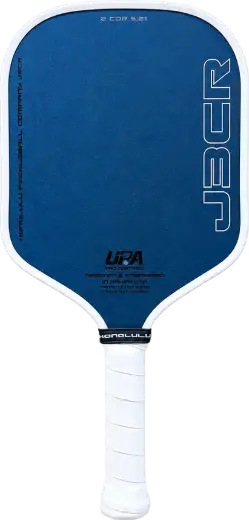
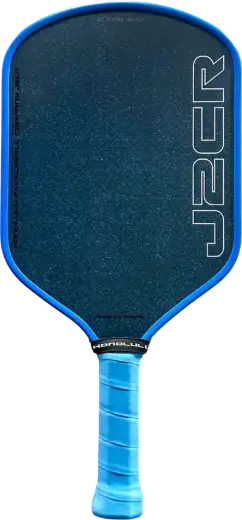
The 16mm half of three pairs above. The Volair Mach 2 Forza tops my control list and is second on my beginners list, the Franklin C45 Tempo is seventh on my control list, and the RPM Q2 Widebody is fifth on my widebody list and tenth on my Best of 2026 list. The 16mm Q2 Widebody had far more power than its own 14mm, 90 against 64, and a little more pop, 98 against 92.
I earn a commission when you buy through my links or codes.
Get the 14mm if one of these fits you:
If you go 14mm and want some stability back, lead tape on the sides raises twist weight.
Hybrid · 14mm
$206.99list price $229.99with code STSPICKLEBALL
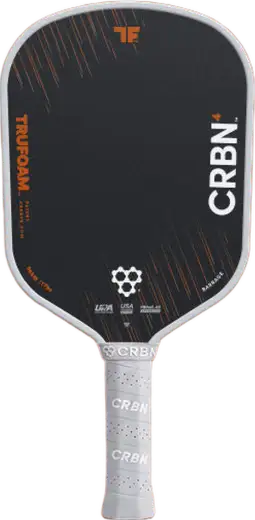
The CRBN TruFoam Barrage 4 is ninth on my Best of 2026 list and tenth on my intermediate list, and it's only sold in 14mm. It swings light, and only three hybrids I've tested have a lower swing weight than its 106.2. It pairs power 87 out of 100 with pop 86, and control 62 is the trade.
I earn a commission when you buy through my links or codes.
For most players, 16mm. I've tested 13 models that come in both 14mm and 16mm, and the 16mm had more control and a bigger sweet spot in all 13, and more power in 10. The 14mm had more pop in nine and a lighter swing in 11, so it suits players who already have control and live in hands battles.
It's the thickness of the core, the honeycomb or foam layer between the two faces. 16mm is about 0.63 inches and 14mm about 0.55 inches, so the gap is about the thickness of a nickel. Most paddles are 16mm now, about two thirds of the ones I've tested. On the same paddle, the thicker core mainly adds control and sweet spot.
Not on full swings in my tests. Of the 13 models I've tested at both thicknesses, the 16mm had more power in 10, by 5 points or more in eight, and hit softer in only one, the Franklin C45 Dynasty, with power 81 at 14mm and 66 at 16mm. The 14mm had more pop in nine, but the typical pop change across all 13 pairs was just 2 points.
16mm. A beginner needs a big sweet spot and an easy soft game, and those are the two things the 16mm improved in all 13 models I've tested in both thicknesses, with control up by a typical 9 points and sweet spot by 6. Twist weight, which measures how steady the face stays on a miss, went up in 12 of the 13. Every paddle on my beginners list is 16mm or thicker.
No. Of the 13 models I've tested at both 14mm and 16mm, the 16mm spun more in seven and less in six, and the typical change was 2 RPM. The biggest gaps ran both ways, 63 RPM more on one paddle and 65 RPM less on another. Spin comes from the face and its surface, so choose a spin paddle by its face, not its thickness.
16mm. The 27 paddles I've tested with the most control are all 16mm or thicker. When I tested PaddleTek's Bantams at 12.7mm and 14.3mm, the thicker one had more control in three of the four pairs, and going from 14mm to 16mm raised control in all 13 pairs I've tested. The thinner core gives you pop instead. PaddleTek's 12.7mm Bantam TKO-CX scores 100 out of 100 for pop, more than any other paddle you can still buy, against 66 at 14.3mm.
Fewer of them. Of the 77 paddles from 2026 I've tested, 66 are 16mm or thicker and not one is thinner than 14mm, while for 2025 it was 65 of 98. 14mm hasn't gone away, but most new models now launch at 16mm, and the CRBN TruFoam Barrage 4 is the only 14mm paddle on my best lists.
Every list holds only paddles I'd pick today, with the price after my code.
Each one answered from my own tests.
Guide
Start with your level, set a budget around $100 unless you want top spin, and then pick a shape. The best paddles under $100 sit near the top on power, pop, sweet spot and control, so top spin is the one thing that really costs more. Shape is what sets your forgiveness, since the typical widebody scores 83 out of 100 for sweet spot against 52 for the typical elongated.
Guide
The elongated hits harder, the widebody forgives more, and the hybrid sits in between. Ten models I've tested come as both an elongated and a widebody, and the elongated had more power in eight of them, typically by 7.5 points of power. The widebody had the bigger sweet spot and more control in all 10, typically by 28 points of sweet spot and 29 of control.
 No. 2
 No. 3
 No. 4
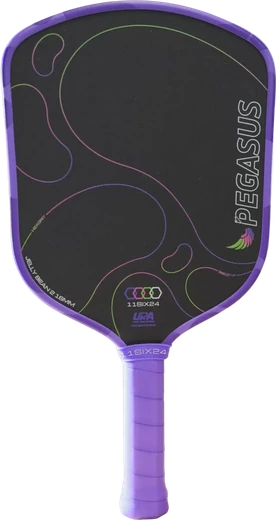 No. 3
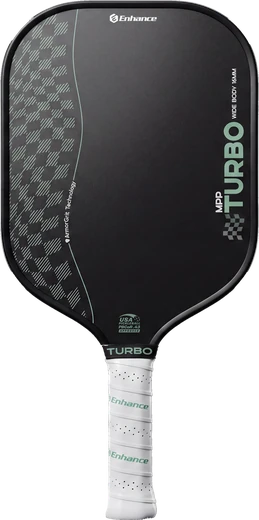 No. 4
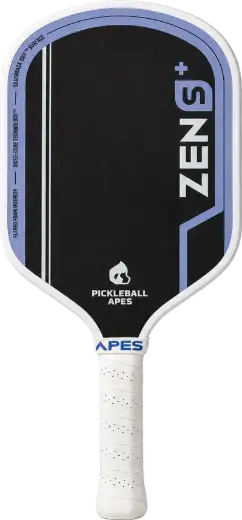 No. 1
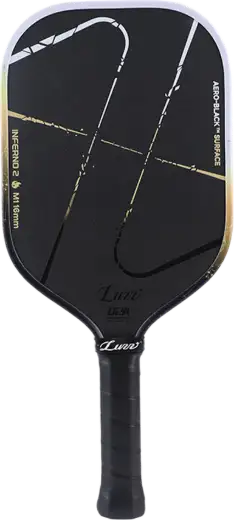 No. 2
 No. 3
 No. 4
 No. 1
 No. 2
 No. 3
 No. 2
 No. 3
 No. 4
 No. 1
 No. 4